A social media posting schedule is your game plan. It dictates what you post, when you post it, and where. It’s the critical difference between just being on social media and actually using it to drive consistent, measurable growth.
This isn't about just filling up a calendar with random stuff; it's about making every single post count.
Moving From Random Posts to a Real Strategy
If your social media efforts feel like shouting into the void, you're not alone. So many brands just throw content out there, crossing their fingers that something sticks. The result? Inconsistent messaging and completely unpredictable results.
The shift from that chaotic, "post-and-pray" approach to a deliberate one is where real growth actually begins. It’s how you transform your social channels from a content graveyard into a vibrant community hub. A structured plan isn't just marketing jargon; it's the bedrock of sustainable growth and the best way to prevent your team from burning out.
Why Structure Beats Spontaneity
Let's be real: last-minute posting almost always leads to off-brand messaging and tons of missed opportunities. When you plan ahead, you ensure every piece of content has a purpose and lines up with your bigger business goals.
This is more important than ever as online spaces get more crowded. In 2025, global social media ad spend is expected to hit a staggering $276 billion—a 10.9% jump from the previous year. With that kind of competition, a smart schedule is your secret weapon.
A well-defined schedule brings a ton of benefits that random posting just can't touch:
- Maintains Brand Consistency: It keeps your tone, message, and visuals coherent across every post, every single time.
- Saves Significant Time: Batching your content creation frees you from the daily panic of "what do I post today?"
- Improves Content Quality: When you aren't rushing, you can put real thought into creating valuable, engaging content your audience will actually love.
- Enables Performance Tracking: A consistent posting rhythm makes it way easier to see what’s working (and what's not), so you can tweak your strategy with real data.
The very first step to maximizing your impact online is to stop the haphazard posting and build a clear plan. Learning how to develop and implement a strategic social media posting schedule is the 'why' that powers the 'how,' setting you up for a repeatable system that gets results.
First Things First: Set Your Goals, Know Your People
Before you even touch a content calendar, we need to get two things straight: why are you posting, and who are you talking to? A killer social media schedule isn’t just a random list of times and dates. It’s a strategic blueprint, and its foundation is built on clear goals and knowing your audience inside and out.
Without that foundation, you’re just shouting into the void.
So, what's the end game here? Your answer to that question will shape every single post you create. Trying to be all things to all people is a classic rookie mistake and a fast track to burnout. Let’s focus on nailing one or two primary objectives first.
Define Your Primary Goals
Your goals dictate the kind of content you’ll make and, just as importantly, how you'll measure success. Are you trying to get more eyeballs on your website? Or is the main mission to position yourself as the go-to expert in your niche? Each one demands a totally different playbook.
Let’s break down a few common goals and see how they change your content strategy:
- Generate Leads: Your content needs to drive action. Period. We're talking posts with crystal-clear calls-to-action (CTAs) that point to landing pages, free downloads, or webinar sign-ups. Your entire schedule will be engineered to get these offers in front of the right people at the right time.
- Increase Brand Awareness: Here, it’s all about reach and visibility. You’ll be creating highly shareable stuff—think insightful infographics, thought-provoking threads, or short, punchy videos. Success isn't about clicks; it's measured in impressions, shares, and follower growth.
- Drive Website Traffic: Every post is a bridge back to your home base. You’ll be sharing links to your latest blog articles, product pages, and case studies. The metrics that matter are your click-through rates (CTR) and the referral traffic you see in your website analytics.
A goal without a measurement is just a wish. If you're chasing leads, "likes" are a vanity metric. What you really care about is the number of qualified leads that came straight from your social channels. Tying your schedule to real business outcomes isn't optional—it's everything.
Uncover Who Your Audience Is
Okay, goals are locked in. Now, let’s get laser-focused on who you're actually trying to reach. Going beyond surface-level demographics like age and location is non-negotiable. You need to dig into their professional lives, understand their biggest headaches, and know how they behave online.
To build an audience profile that’s actually useful, start asking yourself some pointed questions:
- What are their biggest day-to-day frustrations at work?
- What kind of content do they genuinely find valuable? (Is it how-to guides, industry news, or deep-dive case studies?)
- Which platforms do they use for professional growth versus scrolling during their lunch break?
- When are they most likely to be online, actively looking for solutions to the problems you solve?
Answering these questions is the difference between creating generic, forgettable content and crafting resources that feel like they were made just for them. When you know your audience this well, every post you schedule lands with impact because it’s relevant, personal, and perfectly timed.
That's how you turn casual followers into die-hard fans.
Finding Your Best Times to Post on Each Platform
You can nail the content and set the perfect goals, but if you show up to the party after everyone's gone home, what's the point? This is where your posting schedule finds its rhythm—in those golden hours when your audience is actually online and paying attention.
Posting at the right time isn't just a "nice to have"; it's the difference between shouting into the void and starting a meaningful conversation.
Think about the different headspaces people are in throughout the day. A 10 AM post on LinkedIn might catch professionals on their first coffee break, ready to soak up some industry knowledge. But that same post would likely fall completely flat on Instagram, where people are scrolling for a bit of escapism after dinner. Every platform has its own unique pulse, driven entirely by its users' habits.
Start With Data, Not Guesses
Instead of throwing spaghetti at the wall to see what sticks, let's start with what the broader data tells us. Most research, including recent studies, points to a general sweet spot for engagement. The best days to post are typically Tuesdays through Thursdays, somewhere between 10 AM and 5 PM.
This window is when most people are active across the major platforms. But—and this is a big but—it's just a starting point. TikTok's energy, for example, often spikes in the evening, while LinkedIn is all business, peaking mid-morning. These general trends give you a solid foundation, but they aren't the final word for your audience.
To get a feel for the broader landscape, here's a quick look at the generally accepted peak times.
Optimal Posting Times by Social Media Platform
Recent user activity data gives us a great starting point for scheduling. Think of this table as your initial hypothesis before you start testing what works for your specific followers.
| Platform | Best Days | Peak Engagement Windows (Local Time) |
|---|---|---|
| Tuesday, Wednesday, Thursday | 9 AM - 12 PM | |
| Tuesday, Wednesday | 10 AM - 2 PM | |
| Tuesday, Wednesday, Thursday | 9 AM - 1 PM | |
| X (Twitter) | Tuesday, Wednesday, Thursday | 9 AM - 3 PM |
| TikTok | Thursday, Friday, Saturday | 6 PM - 10 PM |
Remember, these times are a great jumping-off point, but the real magic happens when you dive into your own data. Your audience might be the exception to every rule.
The most valuable data for your social media posting schedule will always come from your own analytics. Your followers' behavior is the ultimate source of truth for determining when they are most active and receptive to your content.
Dig Into Your Own Analytics
This is where you graduate from generic advice to a schedule built with real confidence. Every single social media platform provides built-in analytics that show you exactly when your followers are online. This data is pure gold.
Start digging for patterns in your native insights:
- Peak Days: Are there a couple of days each week where you consistently see more eyeballs and interactions?
- Peak Hours: Now, get granular. On those peak days, which specific hours see the most activity? Look for trends over a few weeks, not just one good day.
- Top-Performing Posts: This is my favorite trick. Go look at your best posts from the last month. When were they published? If your most-shared piece of content went live at 11 AM on a Wednesday, that’s not a coincidence—it's a clue.
For a deeper look at optimizing your timing, you can find a ton of great resources on the best time to post on social media that cover all the major platforms.
Once you spot these peak windows, start experimenting. Schedule your most important content to go live during these times and watch what happens. The goal is to build a schedule based on hard evidence, ensuring every single post gets its best shot at success. And if you're laser-focused on a B2B audience, you’ll definitely want to check out our specific guide on the best time to post on LinkedIn.
Building a Sustainable Content Workflow
A perfect social media schedule is nothing without a steady stream of good content to fill it. I’ve seen so many people burn out trying to answer the daily question: "What should I post today?" The secret to escaping that hamster wheel isn't magic—it's building a sustainable workflow.
This is where content batching becomes your best friend.
Instead of creating content on the fly, you dedicate specific blocks of time to one part of the process. Think one morning for brainstorming a month's worth of ideas, an afternoon writing all the captions, and the next day creating all the visuals. This approach stops the constant context-switching that absolutely kills creativity and efficiency.
By grouping similar tasks, you get into a state of flow. This isn't just about saving a few hours; it's about making every single post you schedule smarter and more strategic.
Structure Your Ideas with Content Pillars
To make batching even more powerful, you need to organize your schedule around content pillars or themes. These are the core topics your brand talks about over and over again. They make sure you have a healthy mix of promotional, educational, and entertaining posts that your audience actually wants to see.
Let's say you're a business coach. Your content pillars might look something like this:
- Lead Generation Tactics: Sharing practical, actionable tips for finding new clients.
- Productivity Hacks: Showcasing methods for working smarter, not harder.
- Client Success Stories: Highlighting real-world results through case studies and testimonials.
- Behind-the-Scenes: Offering a personal look at your own business journey and challenges.
With pillars like these, filling your calendar becomes a breeze. Monday is for lead gen, Tuesday is a client story, and so on. This simple structure takes the guesswork out of planning and ensures your feed provides balanced value—which is exactly what you need for long-term growth.
Tying Your Workflow to Peak Engagement Times
As you build out your content, you can't forget about your audience's behavior. A great workflow produces content, but an effective one ensures that content gets seen. We know that social media engagement is heavily influenced by when you post, and those peak times are different for every platform.
Recent studies confirm that for B2B or enterprise-focused content, weekday mid-mornings (9 AM–11 AM) are prime time, lining up perfectly with professional routines. You'll often see other peaks during lunch and the early afternoon (12 PM–2 PM). Unsurprisingly, Wednesday often comes out on top as the strongest day overall, with a broad engagement window from 9 AM to 3 PM. You can always dig into more data on Sprinklr.com to get even more specific.
This simple process flow shows how to connect your data with your posting schedule.
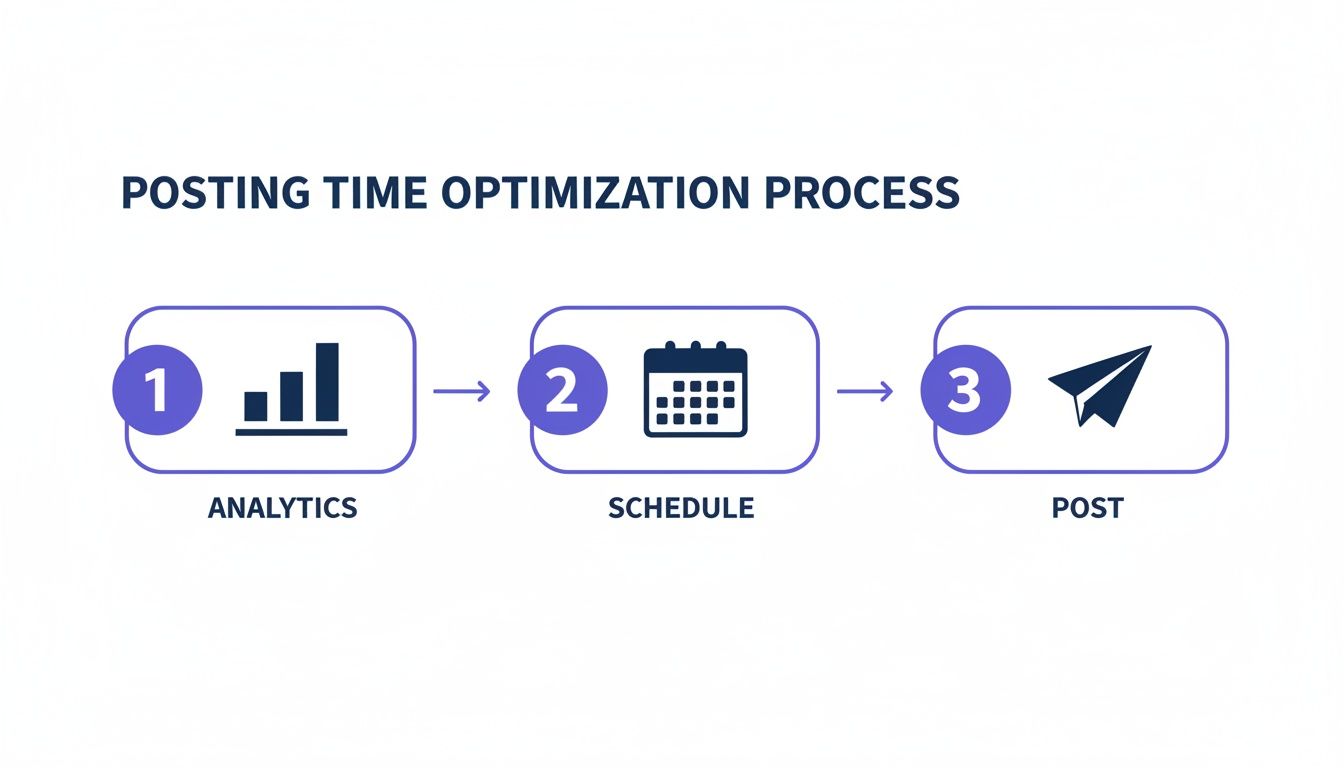
The key takeaway is that your workflow should be a cycle: use your analytics to inform your schedule, then plug the high-quality content you’ve batched into those peak times for maximum impact.
Choosing the Right Scheduling Tools for Your Needs
Let's be real: manually uploading every single post is a one-way ticket to burnout. If you want to build a sustainable social media schedule, automation isn't just a nice-to-have—it's your command center. Scheduling tools are where your entire content strategy comes to life.
But instead of just rattling off a list of popular software, let's talk about how to find the right one for you. A tool that’s perfect for a freelance consultant might be completely wrong for a growing agency. The key is to look at these platforms through the lens of your own specific goals, team size, and budget.
What to Look for in a Scheduling Tool
Not all schedulers are created equal. As you start comparing options, from the free versions great for solopreneurs to the heavy-duty platforms built for teams, you need to focus on features that solve your biggest headaches. A great starting point is to look for tools that give you powerful analytics and make collaboration easy.
Here are the core features you should be sizing up:
- Multi-Platform Support: Does it connect with all the social networks that actually matter to your brand? Make sure it fully supports the platforms where your audience hangs out.
- Analytics and Reporting: The best tools don't just post for you; they tell you what's working and what’s falling flat. Look for clean, clear dashboards that track key metrics like engagement, reach, and click-through rates.
- Team Collaboration Features: If you're not flying solo, you'll need features for assigning tasks, leaving feedback, and managing post approvals to avoid any costly slip-ups.
- Content Calendar View: A visual, drag-and-drop calendar makes it so much easier to see your entire schedule at a glance, spot content gaps, and shuffle posts around when priorities change.
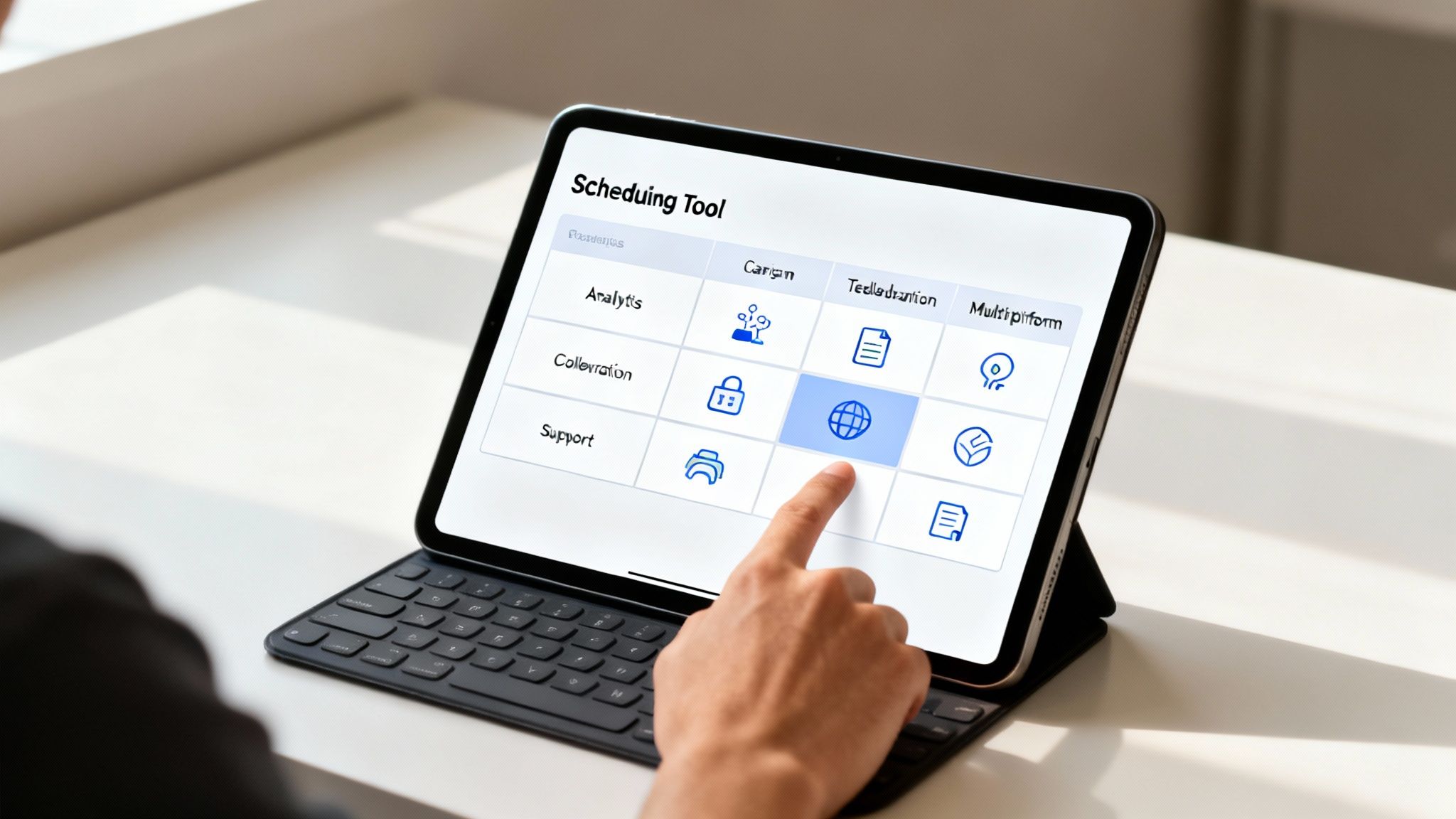
This kind of clean interface is crucial for keeping your posting schedule organized and making sure nothing slips through the cracks. It turns a chaotic list of posts into an actionable plan.
Making the Final Decision
Picking a tool is a commitment, so take your time with it. Almost every platform offers a free trial, and you should absolutely take advantage of it. Get your hands dirty and test the workflow. Does it feel intuitive? Does it genuinely make your process simpler?
The goal is to find a platform that feels like a natural extension of your workflow, not another complicated system you have to fight with. Your scheduling tool should simplify your life, not add to the chaos.
Ultimately, the right software automates the tedious stuff, freeing you up to focus on what really moves the needle: creating fantastic content.
For a deeper dive into how these tools fit into a broader strategy, check out our guide on how to streamline your social media scheduling with smart post management. Remember, a good tool empowers a great strategy.
Measuring Performance and Refining Your Schedule
Let's be clear: your social media posting schedule is not a crockpot. You can't just "set it and forget it" and come back later to a perfectly cooked meal.
Think of it as a living document, a dynamic strategy that has to adapt based on real-world feedback. The only way to truly know if your schedule is pulling its weight is to get your hands dirty and track the right performance metrics.
This is where so many people trip up. It's easy to get distracted by vanity metrics like "likes" and follower counts. Sure, they feel good, but they don't tell you a whole lot about what's actually driving your business forward. It’s time to look past the surface and dig into the data that really counts.
Beyond Likes and Follows
To get the real story, you need to track metrics that tie directly back to the goals you set in the beginning. Each piece of data tells you something different about what your audience wants and how your content is landing.
Reach and Impressions: This is your starting point. It tells you how many unique people saw your post (Reach) and the total number of times it was viewed (Impressions). If you schedule a post for a "peak" time and the reach is dead in the water, that's a huge sign that your golden hour might be a dud.
Engagement Rate: This is the big one. It's the percentage of your audience that actually did something—liked, commented, or shared your post. This is a powerful gut check on your content quality and timing. If you see a sudden drop, it might mean a certain content pillar just isn't hitting the mark.
Click-Through Rate (CTR): For any post that includes a link, this is non-negotiable. CTR shows you how many people were compelled enough by your post to click through to your website or landing page. A high CTR is a beautiful thing; it means your content, your call-to-action, and your timing were all perfectly aligned.
Your analytics are a direct conversation with your audience. When you learn to listen, they will tell you exactly what content they want, when they want it, and what makes them take action. This feedback loop is what turns a good schedule into a great one.
You don't need a complicated system to get started. A simple review process is all it takes to begin making smarter decisions.
We take a much deeper look at this process in our guide on how to analyze content performance. Whether you do it weekly or monthly, this regular check-in is where you'll spot the trends, double down on what’s working, and cut the dead weight from your schedule. This cycle of analyzing, learning, and tweaking is what transforms a simple calendar into a powerful engine for growth.
Your Social Media Scheduling Questions, Answered
Even the best-laid plans run into questions. I get it. After helping countless entrepreneurs and professionals map out their content, I've heard just about every question there is.
Here are the ones that pop up most often, along with some straight-up advice from the trenches.
How Often Should I Be Posting?
Look, there's no single magic number here. Anyone who tells you there is, is selling something. A decent rule of thumb to start with is 1-2 times daily for platforms like Facebook and Instagram, and maybe dialing it back to 3-5 times per week for a professional hub like LinkedIn.
But here's the real secret: consistency beats frequency every single time.
It's way better to show up with three great posts every week, without fail, than to blitz your audience with ten posts one week and then go silent for the next two. Find a rhythm you can actually stick with, and then pay close attention to your analytics. Your audience will tell you if they want more.
What if My Audience Is Scattered Across Different Time Zones?
This is a super common hurdle, especially for brands with a national or global footprint. This is precisely where a good scheduling tool becomes your best friend.
First things first, dive into your audience analytics and pinpoint the main time zones where your followers are hanging out.
You don't need to be posting around the clock. The goal is to schedule your most important content to drop during the peak engagement hours for your biggest audience segments. The smarter scheduling tools out there can even figure this out and do it for you automatically.
Can I Just Post the Same Thing Everywhere?
Please don't. While you can absolutely repurpose a core idea, you need to tailor the delivery to each platform. Think of it like telling a story to different groups of friends—you’d change your tone and emphasis, right?
A deep, professional insight that kills it on LinkedIn won't land the same way on Instagram. But you could turn that insight into a visually engaging carousel for Instagram and then a quick, punchy takeaway for X.
Simply copying and pasting the same message everywhere is a missed opportunity. It ignores what people expect from each app, and your engagement will take a hit because of it.
Ready to stop guessing and start building a real presence on LinkedIn? PostFlow uses AI to turn what you already know into a stream of high-impact posts. Let Emilia, your personal AI content strategist, help you grow your influence without the grind. Start scheduling smarter with PostFlow today.