
Landing a sponsor is all about proving your value long before you ask for a dime. It starts with a deep, almost obsessive, understanding of your audience, nailing down what makes your brand tick, and then tracking the numbers that sponsors actually care about—like real engagement and reach.
Getting this foundation right is what turns a cold pitch into a warm, productive conversation.
Build a Sponsorship-Ready Brand Foundation
Before you even dream of sliding into a brand's DMs, you need to build something they’re actually excited to partner with. I’ve seen way too many creators jump the gun, blasting out emails and messages only to be met with deafening silence.
Why? Because they skipped the most important step: building a platform that screams value.
Think of it like building a house. You wouldn't start putting up walls without pouring a solid concrete foundation. Your brand's foundation is what convinces a potential sponsor that putting their money behind your audience is a smart move. It’s not about follower counts; it’s about having a genuinely engaged community and a crystal-clear identity. This is the stuff that separates the creators who land recurring six-figure deals from those who are constantly scrambling for their next buck.
Define Your Audience with Precision
So, who are you really talking to? If your answer is something vague like "millennials interested in tech," you've already lost. Sponsors need specifics to justify their marketing spend to their boss. You need to dig into your analytics and build a detailed audience persona.
- Demographics: What's the age range, location, and professional background of your core followers? Are they students, execs, or somewhere in between?
- Psychographics: What keeps them up at night? What are their biggest goals, pain points, and motivations? What other brands do they already follow and trust?
- Behavior: When are they online and most active? What kind of content lights up your comments, shares, and saves?
Knowing this lets you walk into a conversation and say, "My audience is made up of 25- to 35-year-old SaaS founders in North America who are actively looking for project management solutions." That’s infinitely more compelling than a generic description.
This graphic breaks down the core pieces of that foundation.
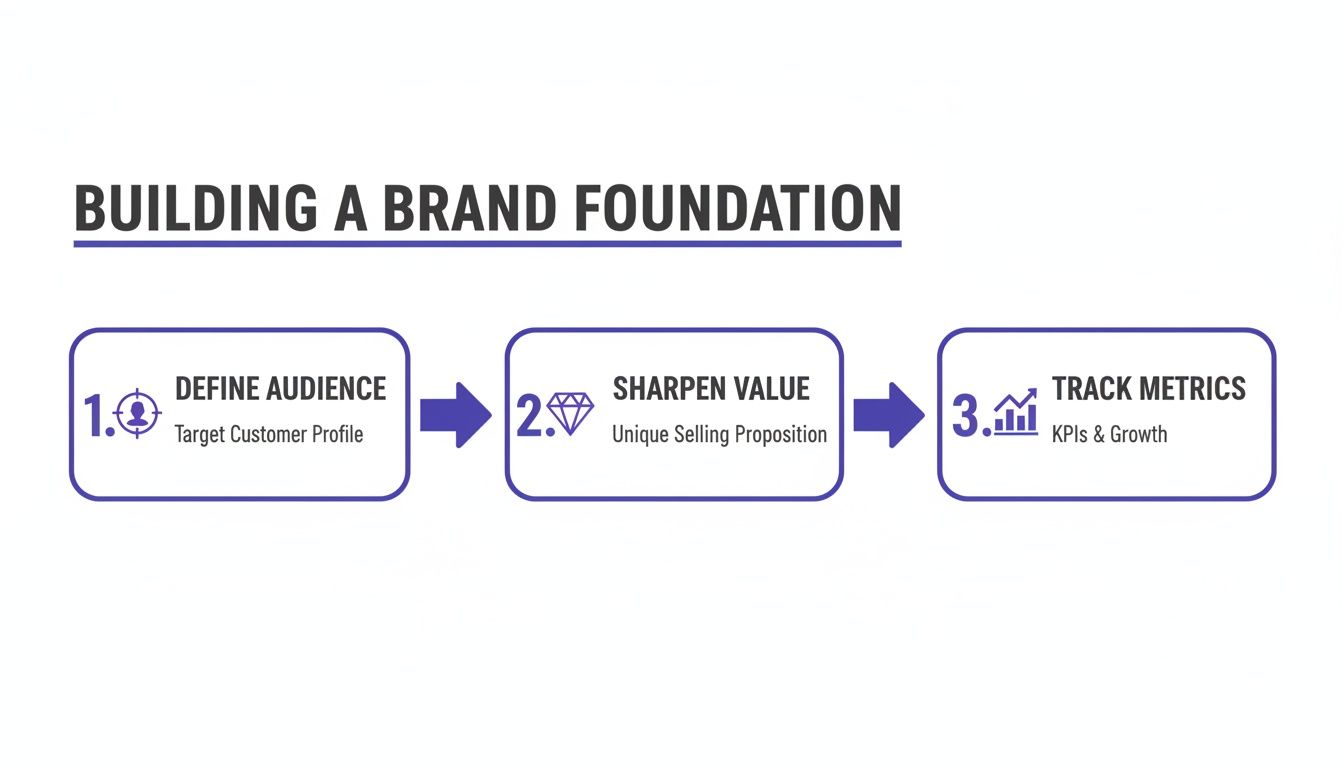
As you can see, it's a clear progression: define your audience, sharpen your value, and then track the right metrics. Only then are you ready for outreach.
Sharpen Your Unique Value Proposition
Once you know exactly who you're talking to, you can define what makes you different. Your unique value proposition (UVP) is the promise you deliver to your audience and, by extension, to your sponsors. It's the reason someone follows you instead of the thousands of other creators in your niche.
Is it your brutally honest product reviews? Your behind-the-scenes look at building a company? Your knack for making a complex topic hilarious?
A strong brand isn't just about what you do, but how you do it and who you do it for. That clarity is a magnet for sponsors who share your vision and genuinely value your audience.
This foundational work is critical and goes way beyond just landing sponsorships. For a deeper dive, check out our complete guide on how to build a personal brand that commands attention. Building this authentic presence first makes every single step that follows so much easier.
Turn Your LinkedIn Profile Into a Sponsor Magnet

With your brand foundation locked in, it’s time to set up your digital storefront. And for anyone serious about landing high-value partnerships—especially in the B2B space—that storefront is LinkedIn.
Forget thinking of it as just an online resume. It's the landing page where potential sponsors will vet your credibility long before they even think about replying to your pitch.
Think about it from their side for a second. A brand manager gets your cold email. What’s the very first thing they do? Open a new tab and search your name. An outdated or bare-bones LinkedIn profile screams "not a serious player." A strategic, active one, on the other hand, starts building trust for you before you've even had a conversation.
Optimize Your Core Profile Elements
Your profile needs to tell a potential partner exactly what you're about in a matter of seconds. Start with the elements people see first, because those first few moments are everything.
- Your Headline: Ditch the generic job title. Seriously. Use this space to declare your value proposition. "Helping SaaS Founders Scale with Content" is infinitely more compelling than just "Content Creator."
- Your Summary (About Section): This is the executive summary for your personal brand. Tell a story that highlights your expertise, clearly defines who your audience is, and hints at the killer results you deliver.
- Your Featured Section: Treat this like your personal highlight reel. Pin your best-performing content, a powerful case study, or a direct link to your newsletter. It’s hard proof of your influence and engagement.
Your LinkedIn profile is your pre-pitch. It answers a sponsor's unspoken questions about your authority, audience, and reliability before you ever have to say a word.
Getting this initial setup right is non-negotiable for visibility. I mean, profiles that list 5 or more skills get a whopping 17 times more views. That’s a massive leg up when you're trying to get noticed.
And considering 97% of B2B marketers use LinkedIn for content marketing and 80% of high-quality B2B leads start there, you simply can't afford to neglect it.
Develop a Consistent Content Strategy
An optimized profile gets you on the radar, but it's consistent content that builds real authority and proves you’re a reliable long-term partner. You don't need to post five times a day. What sponsors are really looking for is a steady drumbeat of valuable insights that showcases your expertise.
A simple, sustainable strategy could look like this:
- Share a unique insight or a strong opinion related to your niche.
- Post a case study or a specific result you achieved for a client.
- Engage thoughtfully on posts from other leaders in your industry.
This rhythm shows you're an active participant in your field, not just a passive observer selling something. It's a live portfolio of your work and your thinking.
Consistency is what turns your profile from a static page into a genuine sponsor magnet. For a deeper dive into tactics that actually work, check out our complete guide on how to stand out on LinkedIn.
When you combine a polished profile with a steady stream of expert content, you stop being just another person asking for money. You become a valuable partner offering a direct line to a targeted, engaged audience.
Pinpoint and Qualify Your Ideal Sponsors
Forget wasting hours sending generic pitches into a black hole. The real secret to landing sponsors isn't about volume—it’s about precision.
Too many creators make the rookie mistake of chasing the biggest names in their industry. The smarter play? Find companies that are already investing in your niche, the ones who will see your audience as a perfect match.
This takes a bit of a detective-like approach. The best partnerships feel completely natural because they’re built on real alignment between your brand, your audience, and the sponsor's goals. Your job is to find that alignment before you even think about hitting send on an email.
Building Your Targeted Prospect List
The first order of business is creating a focused list of potential sponsors. This isn't a quick brainstorm; it's research that saves you a mountain of time and rejection down the line.
Here are a few goldmines for finding the right brands:
- Analyze Competitors and Peers: Who is sponsoring other creators in your space? Check out their podcasts, YouTube videos, and newsletters. This is the clearest sign you can get that a company understands and values your kind of audience.
- Check Industry Publications and Event Sponsors: Who’s buying ads in the trade magazines your audience reads? Who’s plastering their logo all over the conferences they attend? These companies are actively spending money to reach the exact people you have access to.
- Use Advanced LinkedIn Search: Don't just type a keyword and hope for the best. A tool like Sales Navigator lets you get granular, filtering companies by industry, size, and even recent activity. For a deeper dive, our guide on how to generate leads on LinkedIn has some killer strategies you can adapt for sponsor hunting.
As you build this pipeline, it’s also smart to think bigger. Don't limit yourself to just corporate sponsorships. It’s worth exploring all the top sources for project funding, from grants to crowdfunding, to see what else might fit.
A Quick Checklist for Vetting Sponsors
Once you have a list, it’s time to qualify each one. A great sponsor isn't just a company with a checkbook; it’s the right company. Before you add a brand to your final outreach list, run them through this gut-check.
Is there clear audience overlap? Would my audience genuinely benefit from this brand's product or service, or would it feel forced?
Does the company's brand voice and values align with mine? A mismatch here can seriously damage the trust you’ve worked so hard to build with your community.
And the big one: have they sponsored similar creators or projects before? A track record of partnerships means they already have a process and a budget for this stuff. That's a massive advantage for you.
Answering these questions honestly will help you filter your list down to the absolute best prospects. It’s this targeted approach that ensures every pitch you send is relevant, personal, and actually has a real shot at success.
Design Sponsorship Packages That Actually Sell
Sending out a generic, one-size-fits-all proposal is the fastest way I’ve seen to get a pitch ignored. Potential sponsors are drowning in these. They need to see a clear, immediate path to ROI, which means you need to offer structured packages that speak to different goals and budgets.
Think about it from their perspective. A seed-stage startup might be all-in on brand awareness, while a more established company is probably laser-focused on generating qualified leads. Your packages have to reflect that reality. It’s about reframing your platform not as a cost, but as a strategic investment that solves a problem for them.
This means you have to stop thinking about what you want to sell and start thinking about what your partners need to buy.
Build Tiers for Different Goals
The most effective approach I’ve found is a tiered system. It just works. This model gives potential sponsors clear options and makes it painfully obvious what extra value they get by moving up to the next level.
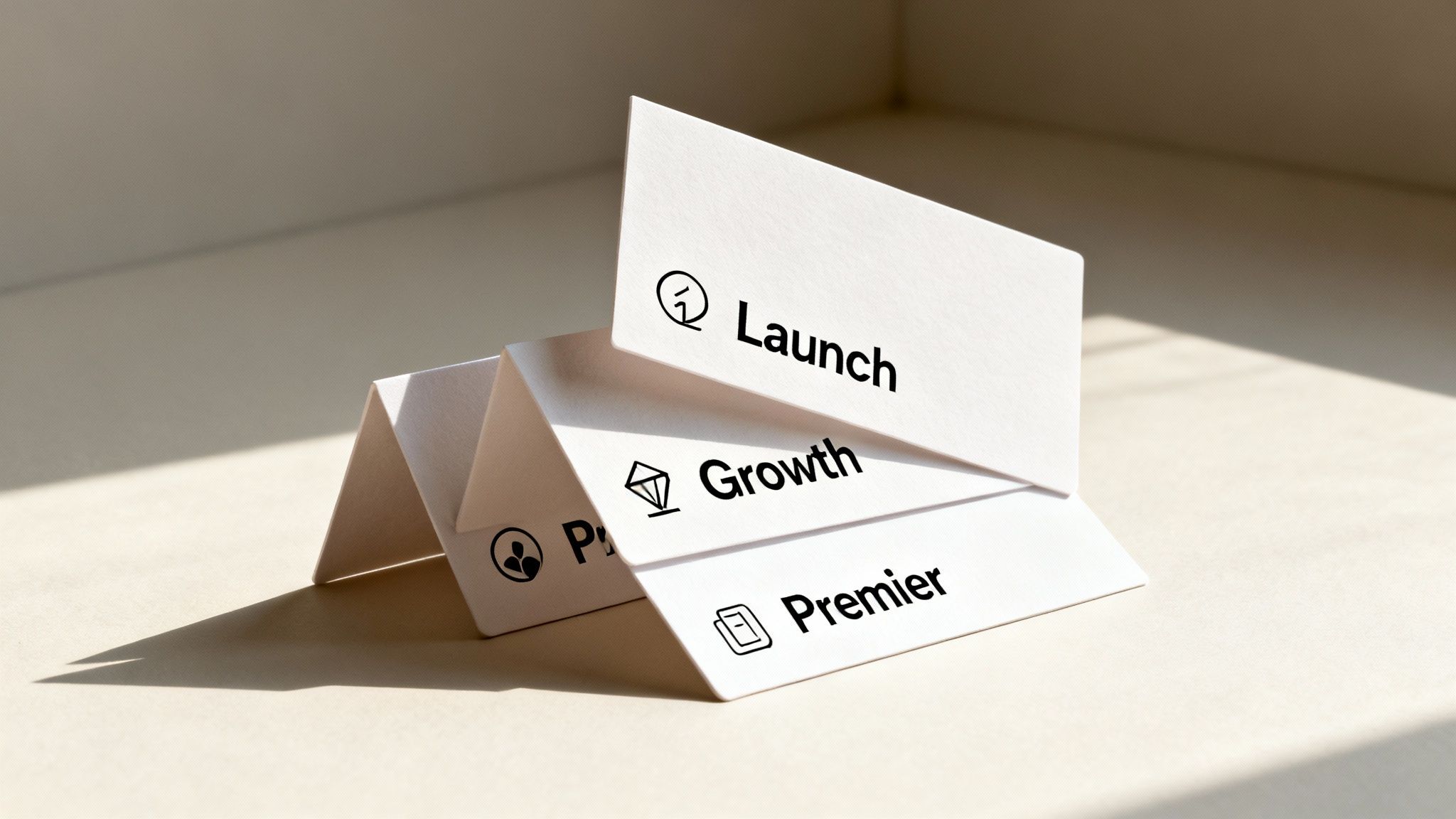
A classic three-tier structure is a fantastic starting point for most creators and brands. You can get creative with the names, but a simple framework like "Launch, Growth, Premier" is straightforward and easy for anyone to grasp.
- Launch Tier: This is your foot-in-the-door package. It’s perfect for brands with smaller budgets or those who are just testing the waters with a new partnership. Think a social media shout-out and a logo placement in your newsletter.
- Growth Tier: This is your mid-level option, designed to offer a more integrated experience. Here, you could include a dedicated piece of sponsored content (like a blog post or video) and more prominent social features.
- Premier Tier: This is your all-in, premium partnership. It should include everything from the lower tiers plus your highest-value deliverables. We're talking lead-gen opportunities like a co-hosted webinar or even direct product integration.
The point of tiered packages isn't just about offering different price points. It's about showing a clear ladder of value, making the decision to invest more feel like a natural, logical next step for the sponsor.
This structure is a game-changer because it helps you capture a much wider range of sponsors by meeting them exactly where they are.
Clearly Define Your Deliverables
Vague promises like "brand exposure" are red flags for experienced marketing managers. They won't cut it. Sponsors need to know exactly what they're paying for, down to the last detail. Your packages must list specific, tangible deliverables.
For every single item you list, you should be able to track it and report on its performance. No exceptions.
Here’s a simple way to structure your sponsorship packages with clear deliverables and value propositions for potential partners.
Example Sponsorship Package Tiers
| Deliverable | Tier 1 (Launch) | Tier 2 (Growth) | Tier 3 (Premier) |
|---|---|---|---|
| Newsletter Logo | ✔️ | ✔️ | ✔️ |
| Social Media Mention | 1 Post | 3 Posts + 1 Story | 5 Posts + 3 Stories |
| Sponsored Content | ❌ | 1 Blog Post | 1 Video + 1 Blog |
| Webinar Co-Host | ❌ | ❌ | ✔️ |
| Performance Report | Basic | Standard | Detailed |
Each item is a concrete action you're committing to. This kind of clarity eliminates confusion from the get-go and builds a foundation of trust before any money changes hands.
Price Your Packages with Confidence
Finally, you have to price your packages based on the real-world value you provide. Don't just pull a number out of thin air. Your pricing needs to be a calculated decision based on a few key factors:
- Audience Size and Engagement: How many people do you reach, and more importantly, how much do they care? High engagement rates are often far more valuable to a sponsor than a massive but passive audience.
- Industry Benchmarks: Do your homework. See what other creators in your niche with a similar audience are charging. This gives you a realistic baseline to work from and helps you avoid under or over-valuing your work.
- Value of Deliverables: A dedicated video review that takes you 10 hours to produce is worth significantly more than slapping a logo in your email footer. Price each deliverable accordingly.
When you combine these factors, you can build packages that are not only compelling and easy to understand but also profitable. This strategic approach is fundamental to learning how to find sponsors who stick around for the long haul.
Mastering the Art of the Sponsorship Pitch
 This is where all your hard work starts to pay off. A thoughtful, personalized pitch can open doors you never thought possible. On the flip side, a generic, copy-paste message is a guaranteed trip to the trash folder.
Successful outreach is a mix of good strategy, a bit of empathy, and persistence—especially when you’re taking a LinkedIn-first approach.
Remember, your prep work isn't just about what you're going to say. It’s about the authority you’ve already built. Having a consistent content presence turns a cold pitch into a warm conversation, making the whole thing feel more natural from the get-go.
The LinkedIn-First Outreach Strategy
Forget spamming inboxes. The real goal on LinkedIn is to start a genuine connection before you ever whisper the word "sponsor." It's a soft-touch approach that respects the decision-maker's time and builds some actual rapport.
It all begins with a personalized connection request. Don't use the generic default message. Write a quick, custom note that shows you’ve actually looked at their profile.
- Example Connection Request Note: "Hi [Name], I've been following [Company Name]'s work in the AI space and was really impressed with your recent launch campaign. Your approach to marketing aligns perfectly with the value I bring to my audience of SaaS founders. Would love to connect."
See? It’s not a sales pitch. It's a simple, peer-to-peer nod that finds common ground. It makes accepting your request a no-brainer.
A great pitch feels less like an ask and more like a strategic opportunity. The goal is to make saying ‘yes’ the most logical conclusion for the potential sponsor.
Once they accept, the real work begins. Your first message should continue the conversation, not immediately pivot to a hard sell. It’s about showing value and gently steering them toward the idea of a partnership.
Crafting Messages That Actually Get Replies
After you connect, your first direct message needs to be brief, valuable, and end with a soft call-to-action. You're just trying to gauge their interest and, if the time is right, move the conversation off LinkedIn to a more formal channel.
Your consistent activity on the platform is your secret weapon here. Sponsors notice when you're active. In fact, video content gets 20x more shares, and with users spending over seven minutes per visit, your engaging content makes your pitch that much stronger.
When you do shift the conversation to email, knowing how to write cold emails that get replies is a critical skill that can make or break the deal.
Structuring Your Formal Pitch Deck
When you finally get a "yes" to seeing a proposal, your pitch deck needs to tell a compelling story, not just dump a bunch of data on them. Keep it concise, visual, and focused on them.
- The Problem: Kick things off by framing a challenge they face in reaching your specific audience.
- The Solution: Position your platform and audience as the perfect solution to that exact problem.
- The Proof: This is where you bring out your key metrics—engagement rates, audience demographics, and any past campaign wins.
- The Packages: Lay out your tiered sponsorship packages with crystal-clear deliverables and pricing.
- The Next Steps: End with a simple, clear call-to-action, like scheduling a quick call to walk through the options.
This structured approach shows you've thought deeply about their needs. It positions you as a true strategic partner, not just another line item on their marketing budget.
Answering the Tough Sponsorship Questions
Alright, let's get into the nitty-gritty. Even with the best playbook, you're going to hit some tricky situations when you start talking to sponsors. It happens to everyone.
Knowing how to handle these moments is what separates the pros from the amateurs. Think of this as your cheat sheet for the most common hurdles you'll face.
How in the World Do I Price My Sponsorship Packages?
Pricing feels like pulling a number out of thin air, doesn't it? But it shouldn't be a guess. Ditch the random numbers and ground your rates in real data and industry standards. This isn't just about confidence; it’s about justifying your value.
Here's where to start:
- CPM (Cost Per Mille): This is your bread and butter—cost per thousand impressions. If your newsletter consistently gets 10,000 opens and the going rate in your niche is a $25 CPM, you've got a solid $250 starting point for a simple ad placement.
- CPE (Cost Per Engagement): Got an active social media crowd? Price your posts based on average engagement (likes, comments, shares). This works great for more interactive content where impressions don't tell the whole story.
- Flat-Rate Fees: If you're creating something big like a dedicated video or co-hosting a webinar, a flat fee makes the most sense. Factor in your production time, the creative effort, and the direct access you're giving them to your audience.
And don't forget the secret sauce: your brand's authority. The trust you've built with your audience is a massive asset. That "brand equity" is why you can (and should) charge a premium on top of the raw numbers.
What Do I Do When a Sponsor Says No?
Let's be real: you're going to hear "no." A lot. But rejection isn't a dead end. It’s a chance to learn and maybe even open a door for later. How you react says everything.
Never, ever burn a bridge. The marketing world is surprisingly small. A polite, professional response today could turn that 'no' into a 'yes' next quarter when their budget resets.
Instead of just ghosting them, send a quick thank-you note. If the vibe feels right, ask for feedback. Something simple like, "Thanks for the quick response! Just so I can improve, was the decision based on timing, budget, or just not the right fit right now?" can give you gold for your next pitch.
What Metrics Do I Absolutely Need in My Sponsorship Reports?
This is how you turn a one-time sponsor into a repeat customer. A killer post-campaign report proves you delivered. It’s not just a nice-to-have; it's your key to getting the next contract signed.
Make sure your report is crystal clear and includes:
- Reach: Total impressions, views, and the number of unique people who saw the content.
- Engagement: Clicks, likes, comments, shares, and the all-important click-through rate (CTR).
- Conversions: This is the big one. If you can track it with unique links or discount codes, show them the leads, sign-ups, or sales you generated.
- Qualitative Feedback: Don't just rely on numbers. Grab screenshots of glowing comments from your audience to show the positive sentiment.
When you lay out the data like this, you're not just showing them what happened—you're making a powerful case for renewing the partnership.
Stop letting great ideas fade away. PostFlow helps you capture your expertise and turn it into a consistent stream of LinkedIn content that attracts sponsors and builds authority. Let Emilia, your AI content strategist, help you grow your presence today.