
A good LinkedIn marketing strategy template isn't just a document; it's a repeatable system for planning, creating, and measuring your content. It’s what turns random posting into a predictable engine for generating leads and building your authority.
This blueprint is often what separates the pros who get real business results from those just chasing likes.
Why a Template Is a Game-Changer for Your LinkedIn Efforts
Let's be real: posting on LinkedIn without a plan feels like shouting into the void. Sure, you might get a few reactions, but are those vanity metrics actually moving the needle for your business? This is where a structured template takes you from inconsistent effort to intentional, sustainable growth.
A solid strategy turns your profile from a static resume into a dynamic lead-generation machine. It’s not just about what you post, but the why behind every single piece of content. When you define your goals, audience, and content pillars upfront, everything you publish has a purpose.
From Content Chaos to Strategic Clarity
So many founders and consultants I've worked with fall into the "random acts of content" trap. They post when inspiration strikes, which inevitably leads to burnout and a muddled brand message. A template is your way out of that chaos.
Instead of waking up and frantically thinking, "What should I post today?", your template is your guide. It outlines your core topics, the post formats your audience loves, and a posting schedule you can actually stick to. This structure frees up so much mental energy, letting you focus on creating high-quality, valuable insights instead of just feeding the algorithm.
A LinkedIn marketing strategy template is your operational playbook. It ensures every action you take—from optimizing your profile to engaging in comments—is aligned with your ultimate business objectives, whether that's booking more sales calls or becoming the go-to expert in your niche.
This process flow breaks down how it all connects, from laying the foundation to seeing measurable results.
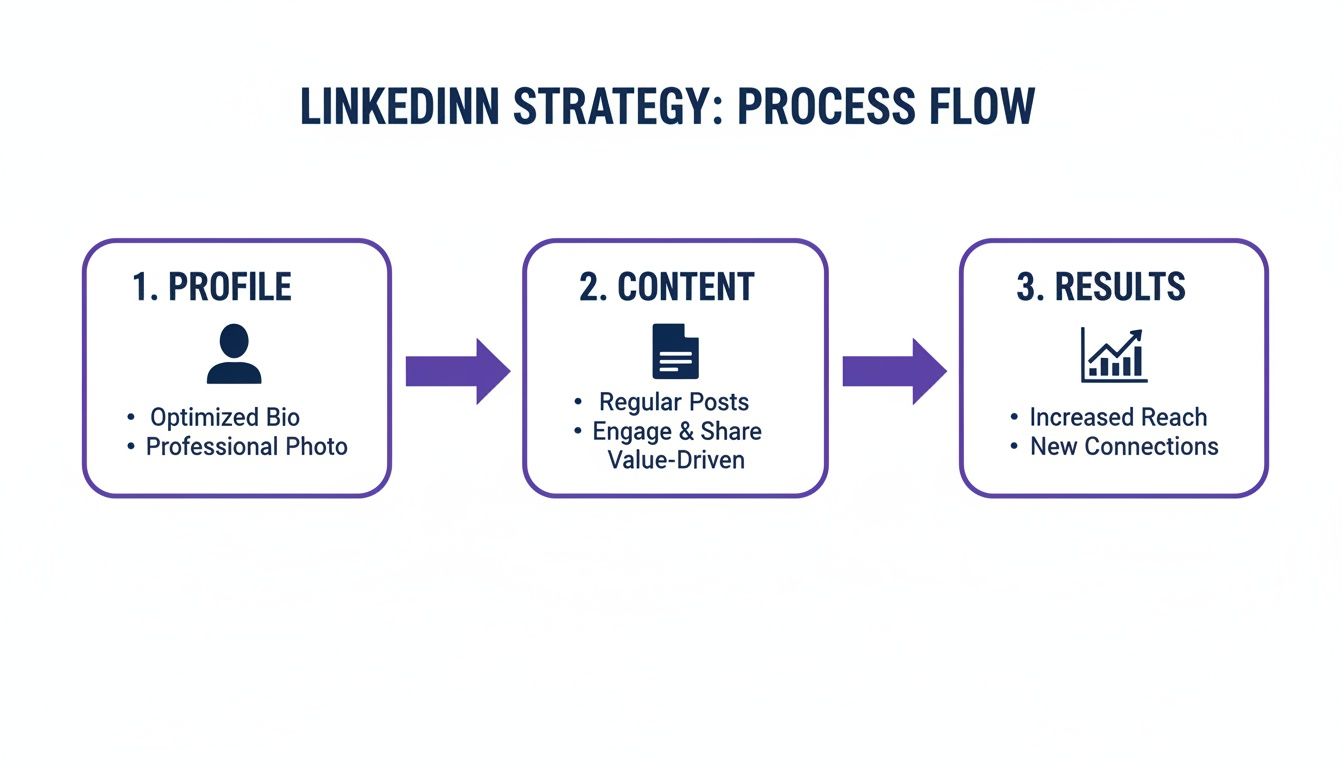
As you can see, a strong profile is the foundation, impactful content is the engine, and analyzing the results is the steering wheel that guides your next move.
Connecting Daily Posts to Actual Business Results
Here's where the magic really happens. A template's true power is in its ability to directly connect your daily LinkedIn activities to tangible business outcomes. When you know exactly who you’re talking to and what you want them to do next, your content becomes incredibly sharp and effective.
This table shows the core components your LinkedIn template should cover, all of which we'll dig into throughout this guide.
| Strategy Component | Key Objective | Primary Metric |
|---|---|---|
| Business Goals | Align LinkedIn activity with business growth | Leads Generated, Sales Calls Booked |
| Audience Personas | Create content that resonates deeply | Engagement Rate, Inbound Messages |
| Content Pillars | Establish authority in specific topics | Follower Growth, Profile Views |
| Content Calendar | Ensure consistent, sustainable output | Posting Frequency, Content Mix |
| KPI Tracking | Measure what matters and optimize | Reach, Click-Through Rate, Conversions |
Each piece works together to create a cohesive, high-impact strategy that delivers results you can actually see and measure.
Here’s a quick look at how the template helps build that crucial connection:
- Targeted Messaging: By defining your audience personas, you can write content that speaks directly to their biggest pain points, making your posts resonate on a whole different level.
- Consistent Authority: Sticking to your defined content pillars constantly reinforces your expertise. Over time, your network starts to automatically associate your name with your specific area of knowledge.
- Measurable Impact: Your template must include Key Performance Indicators (KPIs), forcing you to track what really matters. You’ll know for sure if your efforts are driving profile views, connection requests from ideal clients, or traffic to your website.
Ultimately, this methodical approach is the core of any successful plan. To go even deeper on building this kind of robust plan, check out our guide on creating a powerful content strategy framework. It’s all about building a system for growth, not just chasing likes.
Pinpoint Your Goals and Ideal Audience
Before you even think about writing your first post, let's talk about the single most important part of any LinkedIn marketing strategy template: figuring out your endgame.
Posting on LinkedIn without a clear goal is like driving with no destination. You're moving, sure, but you're not actually getting anywhere. We need to move past fuzzy metrics like "getting more engagement" and anchor your strategy to real business outcomes. What does winning on LinkedIn actually look like for you in the next three or six months?

Define What Success Actually Looks Like
Let's get specific. Your goals have to be measurable and directly tied to how your business grows. This clarity is what will shape every piece of content you create and every comment you leave.
Here are a few examples of goals that have real teeth:
- Generate 10 qualified sales calls a month from inbound messages.
- Boost website traffic from LinkedIn by 25% this quarter.
- Build an email list of 500 potential clients by promoting a lead magnet.
- Land guest spots on 3 industry podcasts to build authority.
A solid LinkedIn lead generation strategy is often the core of a successful plan. This platform is an absolute powerhouse for connecting with the people who make the decisions, so your efforts need to translate into actual business.
This isn't just a "nice to have"—it's non-negotiable. A staggering 97% of B2B marketers are on LinkedIn, and the platform drives 80% of all high-quality B2B leads from social media. If you're not focused, you're just adding to the noise.
Build a Razor-Sharp Audience Persona
Once you know what you want, you need to know who you're talking to. The biggest mistake I see is targeting too broadly—think "small business owners" or "marketing managers." It's just not sharp enough.
You need to build a detailed picture of your ideal client. I'm talking about a specific person you can visualize every single time you sit down to write. This person has real problems, distinct goals, and uses specific language to talk about their challenges. Your job is to know them so well that your content feels like it was written just for them.
The goal isn’t to reach everyone on LinkedIn. It’s to consistently reach the right people—the ones who see the value in what you offer and are most likely to become high-quality clients.
To get started, ask yourself a few pointed questions:
- What's their job title and industry? (e.g., "VP of Operations at a mid-sized SaaS company")
- What are their biggest headaches at work? (e.g., "Inefficient workflows are killing my team's productivity.")
- What are they trying to accomplish? (e.g., "I need to hit a 15% operational efficiency target this year.")
- What kind of content would make them stop scrolling? (e.g., "A case study showing how a similar company automated their processes.")
- What words do they use? (e.g., Do they say "bottlenecks" or "process gaps"?)
A Simple Persona-Building Exercise
Let's make this real. Imagine you're a leadership coach for tech startups.
| Persona Element | Detail |
|---|---|
| Name | "Founder Alex" |
| Role | CEO & Co-founder of a Series A tech startup |
| Team Size | 25-50 employees |
| Primary Pain Point | Struggling to delegate as the team scales, feeling like a bottleneck. |
| Ultimate Goal | Build a self-sufficient leadership team to focus on vision and fundraising. |
| Content They Crave | Actionable frameworks for delegation, stories from other founders who've been there. |
Now, with "Founder Alex" in mind, you're not just creating generic leadership tips. You're creating content that speaks directly to the fear of losing control and the pressure of scaling. That’s the difference between content that gets ignored and content that gets bookmarked, shared, and acted on. This is the foundation of your entire strategy.
Develop Your Core Content Pillars and Formats
Alright, you've got your goals locked in and you know exactly who you're talking to. Now for the fun part: building the engine of your LinkedIn marketing strategy template—your content. This isn't about throwing spaghetti at the wall. It’s about creating a solid foundation with content pillars that consistently prove your expertise and genuinely solve your audience's problems.
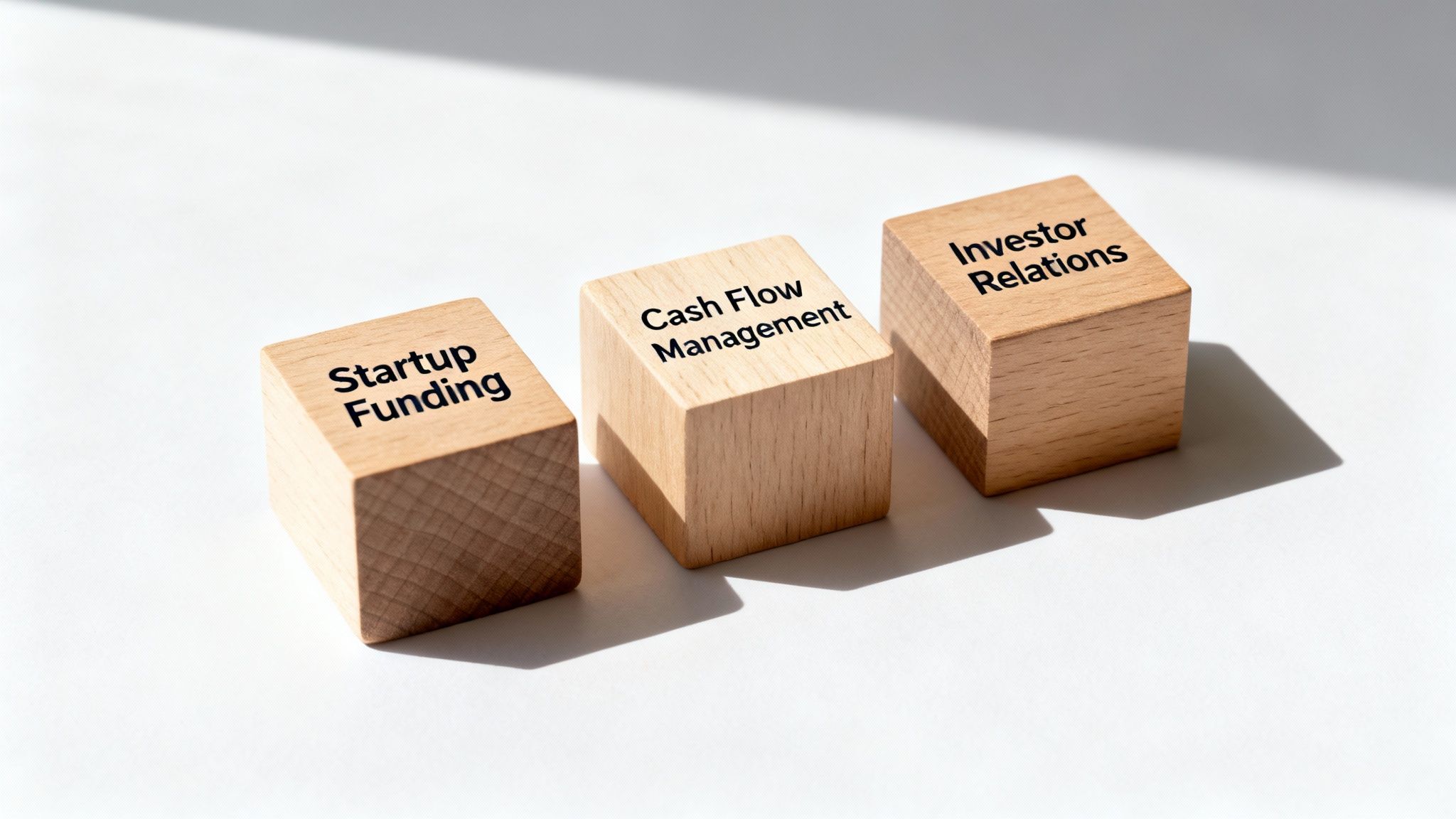
Think of content pillars as the three to five core topics you want to own. These aren't just keywords; they're the big-picture themes that anchor every single post. When people see your name, these are the topics that should immediately pop into their heads.
Establishing Your Foundational Content Pillars
Your content pillars live at the sweet spot where your expertise meets your audience's biggest headaches. This is how you make sure everything you create is both authentic to you and incredibly valuable to them.
Let's say you're a financial consultant targeting early-stage startups. Your pillars might look something like this:
- Startup Funding: Everything from crafting the perfect pitch deck to navigating the world of angel investors.
- Cash Flow Management: Practical, real-world advice on budgeting, forecasting, and making that runway last.
- Investor Relations: The art and science of building and maintaining rock-solid relationships with backers.
See how that works? You're not just posting about "finance." You're carving out a specific, valuable niche and owning it.
Matching Post Formats to Your Strategic Goals
Once you have your pillars, it’s time to think about how you'll deliver your message. The best LinkedIn strategies are a mix of different formats that keep the feed interesting and engaging. Don't just stick to one thing. For instance, video content has seen a massive 36% year-over-year growth in views on the platform—a clear sign that people love dynamic, visual content.
Here’s a quick rundown of the most effective formats and when to pull them out of your toolkit:
- Text-Only Posts: Perfect for sharing a strong opinion, a quick win, or a personal story. They feel raw and authentic, which is why they often spark great conversations. Just make sure that first line is a scroll-stopper.
- Image Posts: A powerful image or a clean graphic can make your words pop. Use this to show off your company culture, visualize a key statistic, or share an inspiring quote.
- Carousels (PDF Documents): These are absolute gold for teaching. Carousels let you break down complex ideas into easy-to-digest, swipeable slides. They’re my go-to for sharing frameworks, step-by-step guides, or turning blog post highlights into a visual treat.
- Video: Nothing builds connection faster than video. Use short clips for quick tips, behind-the-scenes content, or a personal reflection. Longer videos are great for interviews or deep dives.
- Polls: The easiest way to get quick engagement and learn directly from your audience. Ask about their biggest challenges, get their take on an industry trend, or just start a fun conversation.
The real pro-move is to think format-first. Don't just write a post. Ask yourself, "What's the absolute best way to deliver this specific message to my audience today?" Sometimes it's a quick text post; other times, a detailed carousel is what will really land.
The Power of Content Repurposing
The secret to staying consistent isn't about constantly inventing new ideas. It's about getting more mileage out of the ones you already have. Any good LinkedIn marketing strategy template has a plan for repurposing your greatest hits across different formats.
This approach saves a ton of time and hammers your core message home. Let's see how our financial consultant could milk one idea from their "Startup Funding" pillar.
| Core Idea | Repurposing Strategy |
|---|---|
| "The 5 Biggest Mistakes Founders Make in Pitch Decks" | Carousel Post: A 10-slide document breaking down each mistake with a clear solution. |
| Text-Only Post: A personal story about a client who made one of these mistakes and how you helped them fix it. | |
| Short Video: A 60-second clip where you look into the camera and explain the single most common mistake you see. | |
| LinkedIn Poll: "What's the hardest part of creating a pitch deck? A) The Financials B) The Narrative C) The Ask" |
With this system, one strong idea fuels a full week of valuable, multi-format content. You stay consistent, appeal to everyone's preferred way of learning, and get the most bang for your buck without burning out.
Build a Sustainable Content Calendar and Cadence
Great ideas are just that—ideas. Without consistent execution, they're worthless. This is the point where your LinkedIn marketing strategy template stops being an abstract plan and becomes a real-world workflow. A content calendar is your operational command center, turning those content pillars and post ideas into a manageable system that keeps you visible.
Without a schedule, it's way too easy to fall into the “I’ll post when I feel inspired” trap. That’s a fast track to burnout and inconsistency. A calendar gives you structure, ensures you're hitting all your content pillars, and frees up your mental energy to create great content instead of scrambling for ideas at the last minute.

Finding Your Perfect Posting Cadence
So, the big question: "How often should I post?"
The honest-to-goodness answer is that the best frequency is one you can actually stick with long-term. Consistency trumps intensity every single time. It's far better to publish three high-quality posts a week, every week, than to go hard with daily posts for two weeks and then vanish for a month.
Let's look at the most common rhythms I see work for people:
- 2-3 Posts Per Week: This is a fantastic starting point for most professionals. It’s manageable, prevents your audience from getting fatigued, and gives you enough runway to deliver real value without feeling the pressure. It forces you to prioritize quality over quantity.
- 4-5 Posts Per Week (The Weekday Warrior): This is a solid cadence for anyone with a good content creation process dialled in. It establishes you as a daily voice in your industry and dramatically increases your chances to spark conversations.
- Daily Posting (7+ Posts Per Week): This is for the power users who have made LinkedIn a core part of their business. While it offers maximum visibility, it also carries the highest risk of burnout if you don’t have a rock-solid content engine or a team supporting you.
The LinkedIn algorithm absolutely rewards regular activity. When you show up and start conversations consistently, the platform is more likely to show your content to a wider audience. The trick is to find your sustainable rhythm and commit to it.
Remember, 43% of professionals aged 25-34—LinkedIn's core demographic—engage with brands on the platform daily. Consistency is how you stay top-of-mind.
Designing Your Content Calendar
A content calendar doesn't need to be some complex, over-engineered system. Honestly, a simple spreadsheet is often the best tool for the job. It's where you'll plot out your posts, making sure you have a healthy mix of your content pillars and post formats throughout the week.
If you're looking for more ideas, we put together a guide on effective content calendar examples that a lot of pros use to stay organized.
Here’s what a simple weekly schedule could look like for a consultant. Let's say their pillars are "Team Productivity," "Leadership," and "AI for Business."
Sample Weekly LinkedIn Posting Schedule
This sample calendar shows how to mix things up to keep your feed fresh and engaging. You're not just hitting the same note every day.
| Day | Content Pillar | Post Format | Call to Action |
|---|---|---|---|
| Monday | Team Productivity | Carousel | "What's your team's biggest productivity killer? |
| Tuesday | AI for Business | Text-Only Post | "Have you tried this AI tool? Share your experience." |
| Wednesday | Leadership | Video (Quick Tip) | "DM me 'LEAD' for my top 3 leadership resources." |
| Thursday | Team Productivity | Poll | "What's the best tool for remote team collaboration?" |
| Friday | Leadership | Personal Story | "What leadership lesson has stuck with you?" |
Notice how this schedule strategically balances different topics and formats. It’s a simple way to make sure your content doesn't feel monotonous.
The Game-Changing Power of Batch Creation
Now for the real secret to maintaining this cadence without losing your mind: content batching.
This is just the practice of dedicating a block of time—say, two hours every Friday—to create all of your content for the week ahead. Instead of trying to be creative on demand every single day, you get into a flow state and knock it all out at once. It’s a total game-changer.
Here’s how to do it:
- Block the Time: Schedule a recurring 2-4 hour "content creation" block in your calendar and guard it with your life.
- Brainstorm First: Spend the first 20 minutes just dumping ideas for each pillar. Don't write, just generate raw concepts.
- Write and Create: Use the next chunk of time to write the copy for all your posts and create any visuals you need (like carousel slides or simple graphics).
- Schedule Everything: Use a scheduling tool like PostFlow to load everything up for the week. Set it and forget it.
By batching, you separate the creative work from the administrative task of scheduling, making both far more efficient. This one habit is probably the most effective way to ensure your LinkedIn marketing strategy template becomes a living, breathing part of your business growth.
Measure Your Performance and Refine Your Strategy
Getting your content created and scheduled is a huge win, but it’s really only half the job. The real engine for growth in your LinkedIn marketing strategy is what happens after you hit publish. This is where you put on your analyst hat, dig into the data, and let the numbers tell you what’s actually working.
Without this feedback loop, you’re basically just guessing.
Posting on LinkedIn without checking your analytics is like giving a presentation with your eyes closed. You might hear some murmurs, but you have no clue who's engaged, who's nodding along, and who quietly slipped out the back. LinkedIn Analytics is how you finally open your eyes. It’s what turns your gut feelings into data-backed decisions.
Focus on Metrics That Actually Matter
It’s incredibly easy to get lost in a sea of data. Clicks, impressions, likes—what should you really be paying attention to? The secret is to ignore the vanity metrics that give you a nice ego boost but don't signal any real business impact.
Instead, zero in on the Key Performance Indicators (KPIs) that tie directly back to the goals you set in the very beginning.
Here are the core metrics you should be tracking consistently:
Engagement Rate: This is the big one. It’s your total engagements (likes, comments, shares) divided by your total impressions. In plain English, it tells you what percentage of people who saw your post actually cared enough to do something about it. A high engagement rate is a massive sign that your content is hitting the mark.
Follower Demographics: Take a look at who’s actually following you. Are they the same people you defined in your ideal client persona? LinkedIn Analytics lets you see the job titles, industries, and seniority levels of your followers. If there’s a mismatch, you might need to tweak your content pillars.
Profile Views: This metric is a dead giveaway for interest. A spike in profile views right after a post means your content was compelling enough to make people want to know more about you. Pay close attention to who is looking—are they potential clients, partners, or just your competitors keeping tabs?
The most valuable metric isn't always on a dashboard. It's the quality of the DMs hitting your inbox. I'd take one message from an ideal client over a thousand likes from the wrong audience any day of the week.
Turning Data into Actionable Insights
Data is just noise until you use it to make smarter decisions. Think of your analytics dashboard as a roadmap showing you where to go next. The process of reviewing your performance doesn’t need to be complicated; it’s really about spotting patterns and asking the right questions.
For a deeper dive, our guide on how to analyze content performance breaks down exactly how to turn those numbers into a clear action plan.
Let’s walk through a few real-world scenarios to see how this plays out.
| Scenario | The Data Shows... | Your Strategic Action |
|---|---|---|
| Carousel Success | A carousel post breaking down a complex framework gets 3x your average engagement rate and a nice bump in profile views. | Double down on this format. It's clearly working. Start planning a series of educational carousels based on your other content pillars. |
| Polls Go Viral | A simple poll about an industry pain point gets hundreds of votes but zero inbound DMs or website clicks. | Recognize that polls are fantastic for quick, top-of-funnel engagement, but they aren't the right tool for driving direct business inquiries. Use them, but with the right expectations. |
| Personal Story Resonates | A text-only post sharing a personal business failure gets an unusually high number of thoughtful comments from people who fit your ideal client profile. | Lean into vulnerability. Your audience is craving authenticity, not just another polished expert. Weave more personal stories into your content mix. |
This cycle of posting, measuring, and refining is the true secret to long-term success on LinkedIn. Your initial strategy is just your best-educated guess. The data is what helps you turn that guess into a predictable, repeatable system for growth. Don't just post and ghost; listen to what your audience is telling you with their clicks and comments.
Got Questions About Your LinkedIn Strategy? Let’s Clear Things Up.
Even with the best LinkedIn marketing strategy template in hand, a few questions always pop up. It's one thing to map out a plan; it's another entirely to put it into motion and face the day-to-day realities.
Let's dive into the most common questions I hear when people start rolling out their new strategy. This is where the rubber meets the road, and knowing what to expect can be the difference between sticking it out and bailing too early.
How Long Until I See Real Results?
This is the big one, right? The honest, no-fluff answer is: it really depends on what you count as a "result."
You'll almost certainly see some quick wins in the first few weeks if you're consistent. Think of these as the early signs that you're on the right track.
These immediate green shoots usually look like:
- More likes, comments, and shares from your target audience.
- A steady trickle of connection requests from people who actually match your ideal client persona.
- A noticeable bump in your profile views.
Don't dismiss these. They are crucial leading indicators that your content is hitting the mark.
But the deeper, business-changing results? Things like building unshakeable industry authority, generating a reliable stream of inbound leads, and becoming the first person people think of in your field—that takes time. Trust and recognition are built brick by brick. You should commit to your strategy for at least three to six months before those bigger wins become consistent and predictable.
What Are the Biggest Mistakes to Avoid?
I’ve seen so many smart, well-intentioned strategies sputter out because of a few common, and totally avoidable, missteps. If you know what the traps are, you can sidestep them from the get-go.
Here are the most common pitfalls:
- Being a walking billboard: LinkedIn is a place for conversation and value, not a non-stop sales pitch. If every single post is a hard sell, your audience will tune you out faster than you can say "buy now." A good rule of thumb is the 4:1 ratio—four posts that give value for every one that asks for something.
- Ghosting the comments section: The conversation doesn't stop when you hit publish; it starts. The comment section is where the magic happens and relationships are forged. Ignoring genuine questions or thoughtful replies is a massive missed opportunity to prove you know your stuff and connect with real people.
- Posting like a ghost: Showing up strong for a week and then vanishing for a month is the fastest way to kill your momentum. The algorithm loves consistency, and so does your audience. Sticking to a sustainable schedule is way more powerful than a short, intense burst of activity followed by radio silence.
Honestly, the single biggest mistake is treating LinkedIn like a monologue instead of a dialogue. Your goal isn't just to be seen; it's to be engaged with. Sparking real conversations is the quickest way to build the trust that leads to business.
Do I Need to Pay for Tools for This to Work?
Nope, absolutely not. The heart of a great LinkedIn strategy—knowing your audience, delivering massive value, and showing up consistently—costs you nothing but time and effort. You can build a seriously powerful presence using nothing more than what LinkedIn gives you for free.
That said, the right tools can be a huge force multiplier, especially as you start to scale. They don’t replace your strategy, but they make executing it a hell of a lot easier and more efficient.
For example, a platform built for LinkedIn can help you batch and schedule your posts, giving you back hours every single week. It can offer deeper analytics that help you figure out what's working and what isn't, way faster. Think of these tools as an investment in efficiency. They free you up to spend your time on what really matters—engaging in the DMs, hopping on sales calls, and creating killer content. The strategy works without them, but they help it work better and faster.
Ready to turn your expertise into consistent, high-impact content without the burnout? PostFlow gives you an AI content strategist, Emilia, who helps you turn your spoken ideas into polished, ready-to-publish LinkedIn posts. Stop staring at a blank screen and start growing your business.