Let's cut through the jargon. At its core, an omni channel platform is the tech that pulls all your customer interactions together into one single, coherent conversation. It doesn't matter if someone is on your website, in your store, or scrolling through your app—this platform is the brain making sure the experience feels connected and seamless.
So, What Exactly Is an Omni Channel Platform?
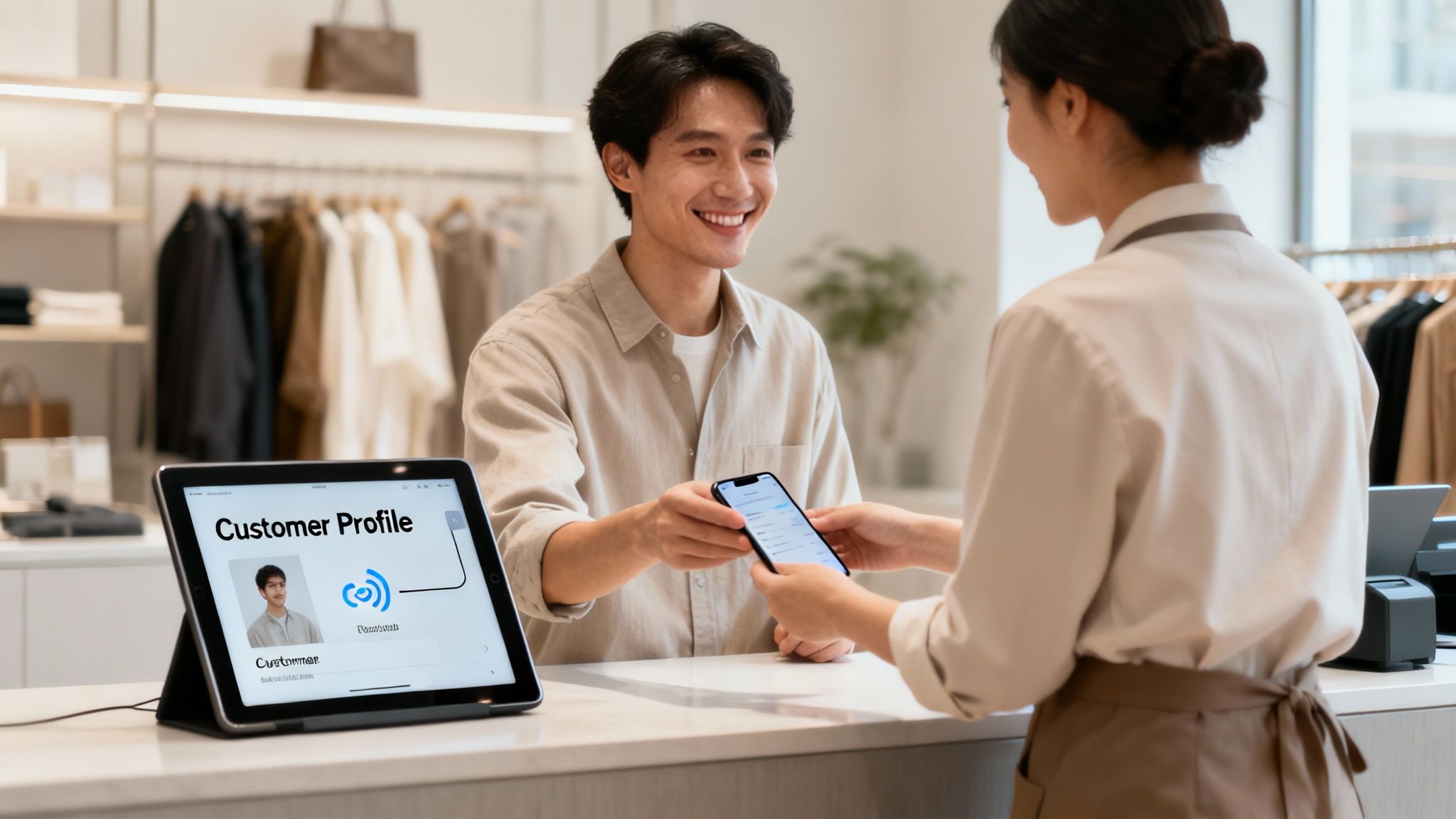
Here’s a real-world scenario. A customer browses for a new jacket on their laptop, adds it to their cart from their phone during their commute, then walks into your store to try it on. Without a unified system, those are just three separate, disconnected events. The store associate has no clue what that customer was doing online just minutes before. Awkward, right?
An omni channel platform gets rid of that friction. It’s not just another piece of software; it's a whole strategy that puts the customer dead center. By tying every touchpoint together, it builds a single, unified profile for each person, giving you a 360-degree view of their entire history and what they actually want.
Think of It as Your Business's Nervous System
A great way to picture an omni channel platform is as the central nervous system of your business. Your website, social media channels, physical store, and call center are all like different limbs. The platform is the brain and spinal cord, making sure that what one part learns, the rest of the body knows instantly.
This creates some seriously powerful, context-aware moments. A customer service agent can pull up a caller’s recent online orders and browsing history, letting them skip the 20 questions and get straight to a helpful solution. To really see this in action, it's worth understanding How Salesforce Unifies Digital Marketing and Technology to create these kinds of smooth experiences.
What's the End Goal Here?
Ultimately, it’s about making every customer feel like you know them, no matter how they reach out. The game changes from trying to make each channel work well on its own to making the entire customer journey feel effortless.
The main goals are pretty straightforward:
- Create a Single Customer View: Pull data from everywhere to build one complete profile for every single customer. No more data silos.
- Keep It Consistent: Ensure your brand's voice, message, and overall vibe are the same whether someone's on TikTok or talking to a cashier.
- Enable Seamless Journeys: Let customers bounce between channels without a hitch. Think starting a cart online and finishing the purchase in-store without having to start over.
- Personalize Everything (at Scale): Use that unified data to serve up relevant offers, smart recommendations, and proactive support in real-time.
At the end of the day, an omni channel platform turns a bunch of separate channels into one smart, cohesive ecosystem that’s built entirely around the customer.
Omnichannel vs. Multichannel Explained
It's a common mistake to toss around "omnichannel" and "multichannel" as if they're the same thing. They're not. In fact, they represent two completely different ways of thinking about your business and your customers. Getting this distinction right is the first real step toward building a marketing strategy that actually works.
At first glance, they look similar—both use multiple channels to reach people. But the real difference is in how those channels work together.
Picture this: multichannel is like a street full of talented musicians, each playing their own tune. They're all skilled, but it's just noise. Omnichannel, on the other hand, is an orchestra. Every instrument follows the same conductor, playing from the same sheet music to create one incredible, unified performance for the audience—your customer.
The Core Difference Is the Connection
A multichannel strategy is just about being present on different platforms. You have a website, a brick-and-mortar store, a social media profile. Great. But these channels are operating in their own little bubbles. Your website has no idea what a customer just did in your store, and your social media team is flying blind about recent purchases. It’s a series of disconnected conversations.
An omnichannel platform flips the script by weaving every touchpoint together. It makes sure the data and the context of the conversation travel with the customer, creating one continuous, seamless experience. This is a fundamental shift from focusing on your channels to focusing on your customer.
An omnichannel approach puts the customer, not the channel, at the heart of the strategy. It’s all about creating a single, fluid experience that molds itself to the customer's journey, no matter how they decide to engage with you.
This isn't just marketing fluff; it has a real impact on your bottom line. Companies that get omnichannel right retain about 89% of their customers, which blows weaker, disconnected programs out of the water. Even better, these integrated businesses can see their revenue grow up to 179% faster than their peers. That’s the raw power of a unified experience. You can dig into the research on omnichannel communication services to see the full picture.
Omnichannel vs Multichannel Key Distinctions
To really nail down the differences, let's put them side-by-side. The table below breaks down the fundamental split in strategy, customer experience, and data between the two approaches.
| Aspect | Multichannel Approach | Omnichannel Approach |
|---|---|---|
| Primary Focus | Channel-centric. The goal is to maximize reach on each platform independently. | Customer-centric. The goal is to create one unified journey across all platforms. |
| Customer Experience | Often inconsistent and choppy. Customers have to repeat themselves when they switch channels. | Seamless and consistent. The context of the conversation follows the customer from one touchpoint to the next. |
| Data & Technology | Data gets stuck in silos within each channel's system, creating fragmented customer profiles. | Data is centralized and shared across all channels, building a single, 360-degree view of the customer. |
| Business Goal | Be present where customers are. Success is measured by individual channel performance. | Build long-term customer relationships and increase lifetime value through a holistic experience. |
At the end of the day, multichannel is about giving customers multiple options to engage. Omnichannel is about making sure all those options work together in perfect harmony. It’s the leap from just being available everywhere to being intelligently connected everywhere.
Core Features of a Modern Omni Channel Platform
To really get what gives an omnichannel platform its punch, you have to look under the hood. It’s not just one piece of software; it's a whole system of interconnected parts working together. The best way to think about it is like a central data hub with spokes—your website, mobile app, and physical store—all connecting back to that core.
This setup is what lets information flow freely between every part of your business, creating an intelligent and, most importantly, consistent experience for your customers. Let's break down the essential features that make it all click.
The Customer Data Platform (CDP)
At the absolute heart of any real omnichannel platform is the Customer Data Platform (CDP). This is the engine that vacuums up, cleans, and stitches together customer information from every single touchpoint you can imagine. We're talking website browsing history, mobile app activity, in-store purchases, and even calls with customer service.
What you get is a 360-degree customer view—one single, reliable profile for every person. This completely smashes data silos. Your marketing team finally knows what your sales team knows, and your support agents have the full story behind every customer interaction. It’s what lets your business recognize someone as the same person, whether they're scrolling on Instagram or standing at your checkout counter.
This diagram shows just how different this customer-first approach is from a disjointed, multichannel setup.
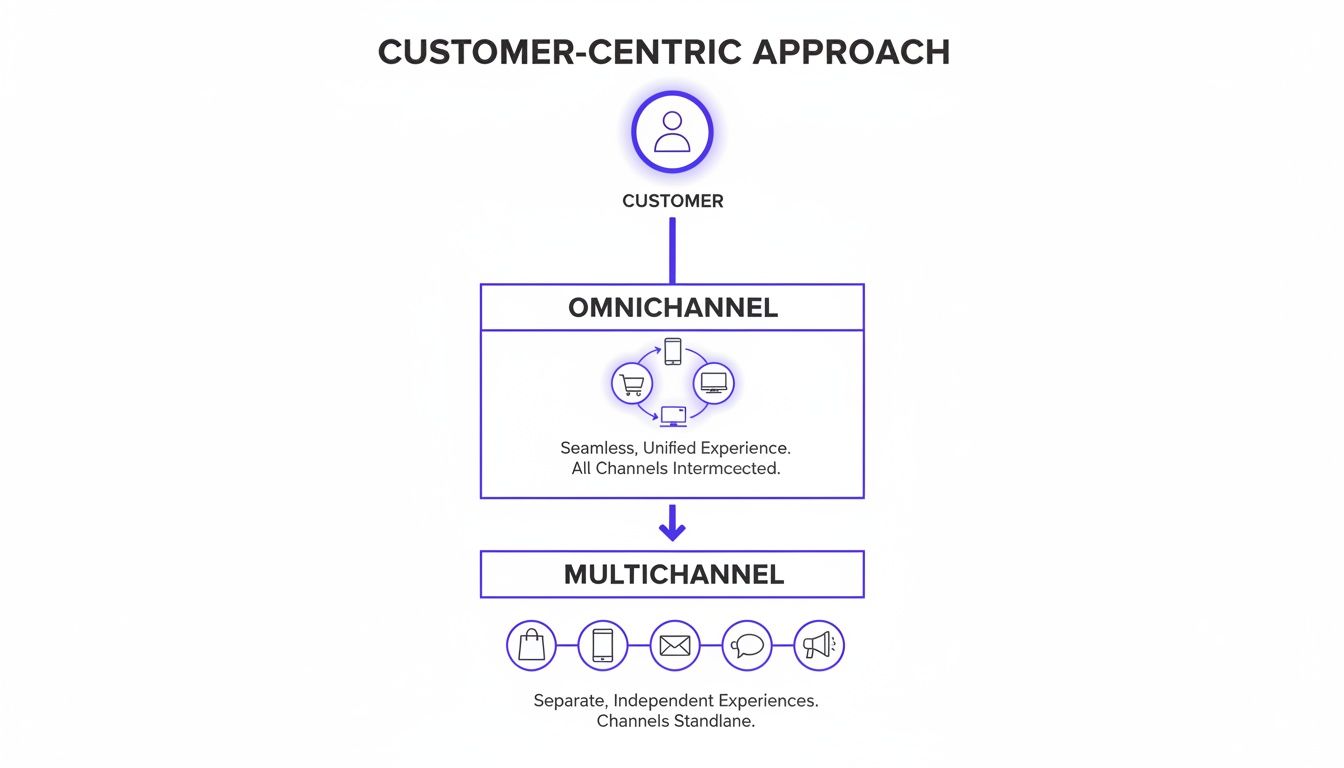
As you can see, the omnichannel model connects everything through that central customer profile. The multichannel model? It just keeps everything separate and messy.
Unified Inventory and Order Management
Ever checked a store’s website to see if an item is in stock, driven all the way there, and found out it’s gone? It's beyond frustrating, and it’s a classic sign of disconnected systems. A proper omnichannel platform has a unified inventory system that syncs stock levels across every location in real-time.
This is what makes those convenient fulfillment options customers now demand actually possible:
- Buy Online, Pick Up In-Store (BOPIS): People can buy something from their couch and grab it from a local store, sometimes in under an hour.
- Ship-from-Store: Retailers can turn their physical shops into mini-distribution centers, which means faster delivery times and lower shipping costs.
- Seamless Returns: A customer can buy a product online and return or exchange it at any physical store, no questions asked.
This kind of integration transforms inventory from a logistical headache into a real strategic advantage, making your operations smoother and your customers happier.
A truly connected system doesn't just show you what you have; it shows you where you have it and how to get it to the customer in the fastest, most convenient way possible. This is the foundation of modern retail logistics.
Integrated Marketing and Personalization Engine
Once you have that unified customer view, you have to act on it. An integrated marketing and personalization engine uses the data from the CDP to send the right message at the right time, on the right channel. This is where your strategy actually comes to life.
It means a customer who ditched a shopping cart on your website might get a gentle reminder email or see an ad for that exact product in their social feed. More importantly, it stops you from making embarrassing mistakes, like sending a promo email for a product someone just bought in-store at full price. The whole point is to create a continuous, personalized conversation. For more on this, check out our guide on how to create engaging social media content that actually connects with people.
Investment in this level of intelligence is exploding. The global market for this tech is expected to hit around $1.83 billion by 2030, with a massive compound annual growth rate of about 31.3%. That tells you everything you need to know about how critical these analytics and real-time actions are becoming.
So, What's the Payoff? Key Business Benefits of an Omni Channel Platform
It's one thing to get excited about the tech behind an omnichannel platform, but let's be real—what actually matters is how it helps your business. The fancy architecture is cool, but the real magic happens when you see a direct impact on your bottom line, customer loyalty, and even your team's day-to-day sanity.
A truly unified platform isn't just a cost center; it's a growth engine.
Think about it this way: one of the biggest wins is just how much it cuts down on customer friction. We've all been there—you buy a product in-store at full price, and the next day you get a marketing email with a discount for that exact item. It’s frustrating and feels like the left hand has no idea what the right hand is doing. An omnichannel setup stops this from happening by making sure marketing, sales, and support are all singing from the same, real-time customer hymn sheet.
Build Loyalty That Actually Lasts (and Pays)
Getting rid of those awkward, disconnected moments is a great start. But a unified experience does more than just damage control; it actively builds relationships that keep customers coming back. When a customer feels like you "get them" everywhere—from your website to your social DMs to your brick-and-mortar shop—they’re far more likely to stick with you.
This isn't just a warm-and-fuzzy feeling; it has a real impact on the balance sheet. Brands that have their omnichannel game figured out see some serious returns. One industry study found that companies with strong, integrated strategies grew their annual revenue by 9.5%, completely dwarfing the 3.4% seen by those with weaker approaches. The data also shows that retailers using three or more connected channels see engagement rates jump by up to 250% compared to their single-channel counterparts.
A truly connected experience makes customers feel valued, not just tracked. This shift from transactional interactions to relational ones is what drives a higher Customer Lifetime Value (CLV) and turns one-time buyers into long-term brand advocates.
Make Your Operations Way More Efficient
Beyond making customers happier, an omnichannel platform brings some serious perks to your internal teams. When you centralize data and finally tear down those walls between departments, you create a much smoother, more collaborative machine.
Here are a few of the biggest operational wins:
- Smarter Inventory: A single view of your stock means you can fulfill an online order from a store that has the item, cutting down on shipping costs and avoiding those dreaded "out of stock" messages.
- Marketing That Works Harder: When you can see the whole customer journey, you know exactly which channels are driving sales. No more guessing where to put your ad spend—you can invest where you know it delivers the best ROI.
- Empowered Support Teams: Your customer service reps can solve problems in a fraction of the time when they have a customer's entire history right in front of them. That means lower support costs and happier customers.
To get the most out of this newfound efficiency, you need to plug it into smart omnichannel marketing strategies that turn those operational wins into killer campaigns.
Finally, Get Data You Can Actually Trust
Last but not least, a central platform gives you one single source of truth for all your customer data. Forget about trying to stitch together messy spreadsheets from ten different systems. Your teams get access to clean, consolidated insights they can actually use.
This high-quality data is the bedrock of smarter business decisions, whether you're brainstorming a new product or planning a market expansion.
It also makes it way easier to prove what's working. If you want a place to start, check out our guide on how to measure social media success and think about how those metrics fit into the bigger picture. When you can draw a straight line from your tech to outcomes like retention and efficiency, it’s a whole lot easier to make the case for investing even more in a customer-first approach.
How to Implement Your Omni Channel Platform
Making the switch to an omnichannel platform is a big strategic move—it's way more than a simple tech upgrade. You need a clear roadmap to sidestep the usual headaches and ensure a smooth rollout. If you break the whole thing down into manageable stages, a project that feels overwhelming becomes a series of achievable wins.
The journey kicks off with a hard look at your current operations. Before you can design a seamless future, you have to get real about the friction points of today. This means putting yourself in your customer’s shoes and hunting down every single frustrating disconnect they experience.
Start with a Customer Journey Audit
First things first, you need to map out every possible path a customer takes when they interact with your brand. Don't just guess here; you need real data. Go through the process yourself, then talk to your frontline teams—the folks in customer service and sales who hear about these problems every single day.
Your audit needs to answer a few key questions:
- Where do customers hit a wall when moving between channels?
- At what point does data get dropped, forcing them to repeat themselves?
- Which processes are jarringly inconsistent between your website and your physical store?
Nailing down these specific pain points gives your implementation a crystal-clear purpose. You're not just buying software; you're solving real-world problems that are bleeding customers and cash. This audit is the bedrock of your entire strategy.
Define Clear Objectives and KPIs
Once you know what’s broken, you can set specific, measurable goals for your new platform. A vague goal like "improve the customer experience" is useless. You need to tie your objectives to tangible business outcomes you can actually track.
A successful implementation isn't measured by getting the software running. It's measured by hitting the business goals you set from the start. Define what winning looks like before you even look at a single vendor.
For instance, your objectives might look more like this:
- Increase Customer Lifetime Value (CLV) by 15% within the first year.
- Slash customer service resolution times by 25% by giving reps unified data.
- Boost Buy Online, Pick Up In-Store (BOPIS) orders to make up 20% of all online sales.
These key performance indicators (KPIs) will do more than just guide your project. They'll help you prove the platform's ROI down the road and give you a solid "why" behind every decision you make.
Assemble Your Cross-Functional Team
An omnichannel implementation is a team sport, not an IT solo mission. You absolutely need a dedicated, cross-functional team with people from every part of the business that touches the customer journey.
Your core crew should include people from:
- Marketing: To keep messaging and personalization strategies aligned.
- Sales: To ensure a smooth handoff from lead to happy customer.
- Customer Service: To use that unified data for top-notch support.
- IT: To handle the technical heavy lifting of integration and data migration.
- Operations: To manage the nitty-gritty of inventory and fulfillment.
This kind of collaboration breaks down those internal silos right from the start, building the very culture of unity an omnichannel platform is meant to create. For the B2B pros on this team, understanding powerful digital content strategies to dominate LinkedIn is a must for weaving professional networks into the bigger picture. Following this structured path will help your business strategically navigate the process and unlock the true potential of a customer-first operation.
Choose the Right Vendor
With your team assembled and goals defined, the next step is finding the right technology partner. This isn't just about features; it's about finding a vendor whose platform aligns with your specific needs and can scale with your business. Creating a systematic evaluation framework helps you compare apples to apples and avoid getting distracted by flashy demos.
Here’s a simple checklist to guide your conversations and keep your evaluation on track.
Vendor Evaluation Framework
| Evaluation Criteria | Key Questions to Ask | Importance (High/Med/Low) |
|---|---|---|
| Core Functionality | Does the platform have all the non-negotiable features identified in our audit? | High |
| Integration Capabilities | How easily does it connect with our existing stack (CRM, ERP, e-commerce)? | High |
| Scalability & Performance | Can the platform handle our projected growth in traffic, data, and users? | High |
| Data & Analytics | Does it provide a single customer view? Are the analytics actionable? | High |
| User Experience (UX) | Is the interface intuitive for both our internal teams and our customers? | Medium |
| Vendor Support & Training | What does the onboarding process look like? What level of ongoing support is offered? | Medium |
| Total Cost of Ownership | What are the full costs beyond the license fee (implementation, training, maintenance)? | High |
| Security & Compliance | Does the vendor meet industry standards (e.g., GDPR, CCPA)? | High |
| Roadmap & Innovation | What is the vendor's vision for future development? Do they innovate? | Medium |
Using a framework like this ensures you make a data-driven decision based on what truly matters for your business, not just on a slick sales pitch. A thoughtful choice here pays dividends for years to come.
Omni Channel Platform Use Cases
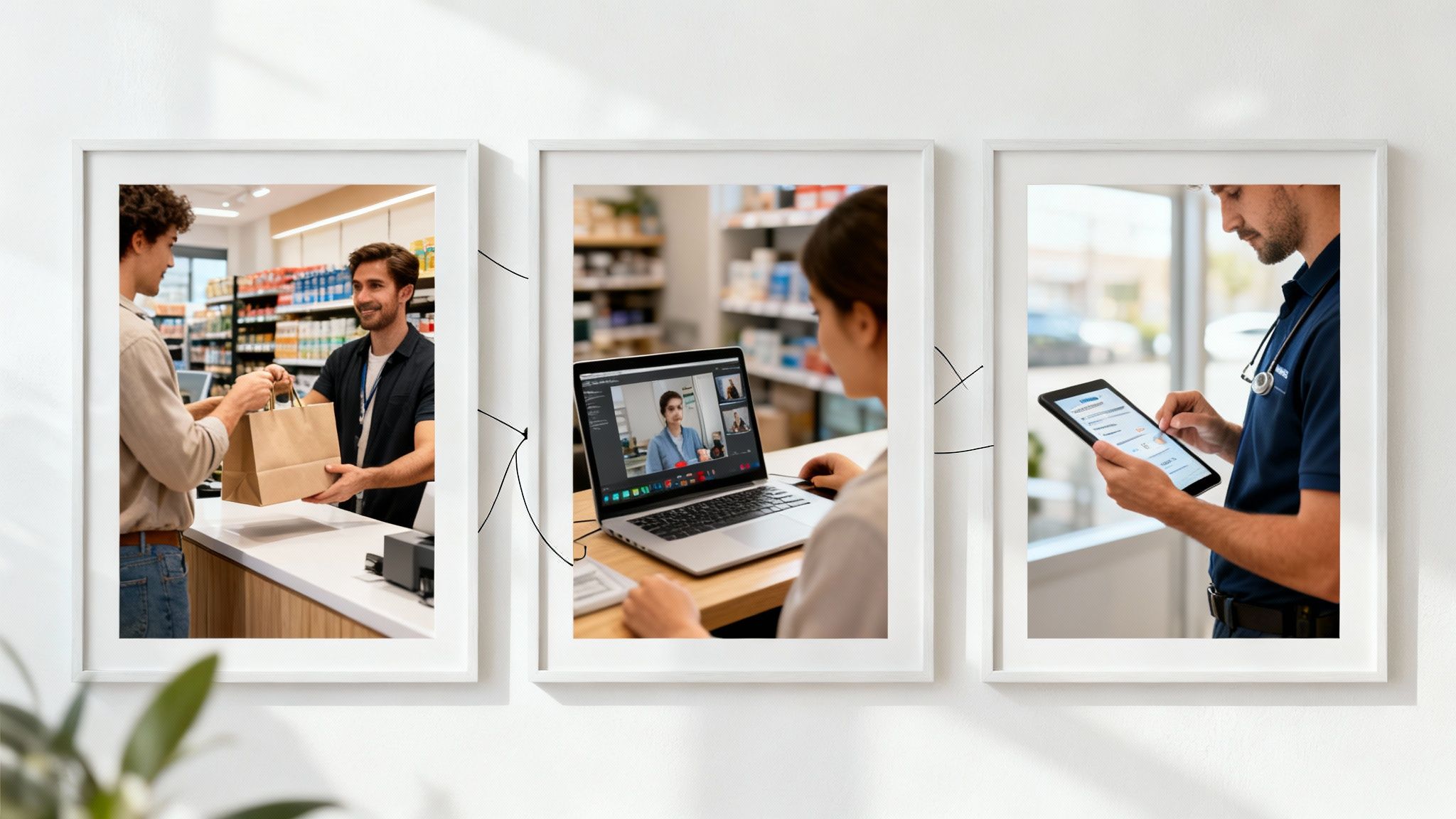
All the theory and feature lists are great, but the real magic of an omnichannel platform happens when you see it in the wild. These platforms aren't a one-size-fits-all solution; they’re designed to adapt to the unique pulse of different industries, solving nagging problems and opening up new ways to connect with customers.
Whether you're in the fast-moving world of retail or navigating the long, complex sales cycles of B2B, the mission is the same: use unified data to create a smarter, more fluid experience. Let's look at how this actually plays out.
Modernizing the Retail Experience
For any retailer today, an omnichannel platform is the engine that drives the seamless experience modern shoppers not only want but expect. It’s what connects the digital aisle to the physical storefront, turning two separate channels into a single, cohesive shopping journey.
Picture this: a customer is browsing for shoes on your website. The platform silently logs their interest. Later that day, when they walk into your brick-and-mortar store, a sales associate gets a notification on their tablet. They can see the customer’s browsing history and immediately offer genuinely helpful, personalized recommendations.
This intelligent link powers other key retail functions:
- Click-and-Collect: Someone buys a product online and gets a real-time text and email the second it’s ready for pickup at their local store. No guesswork.
- Endless Aisle: An item is out of stock in the store. An associate pulls out a tablet, instantly orders it from the warehouse, and has it shipped directly to the customer’s home. Problem solved.
- Unified Loyalty Programs: A customer earns points from an online purchase and can immediately use them at the physical checkout. It’s a frictionless reward system that just works.
By blending the convenience of digital with the human touch of in-store service, retailers use an omnichannel platform to build real relationships and boost customer lifetime value. It’s all about meeting shoppers exactly where they are.
Connecting the Dots in B2B Sales
The B2B sales cycle is a marathon, not a sprint. It’s often long, involving multiple decision-makers and dozens of touchpoints. An omnichannel platform is the glue that holds this entire journey together, making sure every interaction is informed by the last one so leads don't fall through the cracks.
Think about a B2B professional who stumbles upon your company through a LinkedIn post. They click over to your blog, read an article, and then download a whitepaper. An omnichannel platform captures every single one of those steps, building a rich profile of that lead’s interests and engagement level.
This single source of truth allows sales and marketing teams to finally work in sync.
- Informed Sales Outreach: When a salesperson makes that first call, they aren't flying blind. They know exactly what content the lead has consumed and can steer the conversation toward the prospect's specific pain points.
- Personalized Nurture Campaigns: The marketing team can drop the lead into an automated email sequence that delivers relevant case studies based on their site activity, gently guiding them toward a decision.
- Seamless Handoffs: If a lead requests a demo on the website, the platform automatically syncs it with the CRM and notifies the right account executive. For B2B companies, tools like PostFlow become a crucial part of this strategy, using consistent LinkedIn content as that first critical touchpoint in a much larger, connected customer journey.
Streamlining Service-Based Businesses
It’s not just about selling products. Service industries, from healthcare to consulting, see massive benefits from an omnichannel approach. Here, the focus is on unifying communications and appointment management to deliver consistently great service and cut down on administrative headaches.
A client might book their first appointment through an online portal, get a confirmation email, and receive a reminder text the day before. If they have a question, they can hop on the website's live chat, and the support agent instantly sees their entire appointment history. This kind of cohesive process builds trust and makes the client feel like you’ve actually got it all together.
Got Questions? We've Got Answers.
Jumping into an omnichannel strategy can feel like a huge leap, and it's natural to have a few questions. Let's tackle some of the most common ones I hear from businesses trying to figure this all out.
Is This Just for Big Retail Giants?
Absolutely not. That’s a common misconception because big-box retailers were the first to jump on board, but the game has completely changed.
Today’s cloud-based platforms are built to scale. This means they're not just accessible but actually affordable for everyone from B2B firms to scrappy startups. The real goal—giving customers a smooth, connected experience—is just as crucial for a boutique consulting agency as it is for a global brand. You can start small, nail the basics, and add more horsepower as you grow.
What’s the Toughest Part of Implementation?
You'd think the tech would be the biggest headache, but it’s rarely the case. The real challenge is almost always internal: breaking down the walls between your own teams.
Think about it. Marketing, sales, and customer support have traditionally lived in their own separate worlds, with their own goals, their own data, and their own software. An omnichannel approach forces them to work together, focused on a single view of the customer journey. It’s a culture shift, plain and simple.
The platform can connect all your systems, but it takes a collaborative mindset to connect your people.
This is why getting buy-in from leadership right from the start is non-negotiable. You need someone at the top to champion the change and make sure everyone is rowing in the same direction. Without that, even the slickest omnichannel platform will fall flat.
How Do I Actually Know if It’s Working? (The ROI Question)
Measuring the return on an omnichannel platform isn't about one magic number. It's about tracking a handful of customer-focused metrics that link directly back to the goals you set in the first place. The trick is to get your baseline numbers before you flip the switch, so you can see the before-and-after difference.
Here's what you should be watching:
- Customer Lifetime Value (CLV): Are customers sticking around longer and spending more? A rising CLV is a great sign that your unified experience is working.
- Customer Retention Rate: This one’s a biggie. When you make things easy and seamless, loyal customers have fewer reasons to leave.
- Average Order Value (AOV): With better personalization and cross-channel suggestions, you’ll often see people adding more to their carts.
- Customer Satisfaction Scores (CSAT/NPS): The most direct way to find out how people feel. Are they happier? Their scores will tell you.
And don't forget the operational side. Things like faster customer service response times or better inventory management translate directly into cost savings, giving you another solid piece of the ROI puzzle.
Ready to stop missing opportunities on LinkedIn? Let PostFlow help you turn your expertise into consistent, engaging content that grows your business. Try PostFlow today.