People often think starting a blog is just about picking a name and writing. While you can get a site live in just a few hours, the blogs that actually succeed—the ones that build a real audience—start with some serious thought upfront.
It's tempting to jump right into designing your site, but that’s like building a house without a blueprint. The real magic happens before you ever touch WordPress or write your first headline.
Laying the Groundwork for a Blog People Will Actually Read
Before you get lost in themes and plugins, let's talk strategy. The most successful blogs I've seen all have one thing in common: a crystal-clear purpose. They aren’t just random thoughts; they're built on a solid foundation.
This early planning isn't about boxing yourself in. It’s the opposite. It’s about giving your creativity a laser focus. When you know exactly who you're talking to and what you're helping them with, every single piece of content will hit the mark. That's how you go from a personal diary to a must-read resource.
Finding Your Profitable Niche
A blog about "everything" is really a blog about nothing. To get noticed in a sea of content, you need a niche—a specific corner of the internet you can own.
Think small to win big. Instead of a generic "food blog," what about "vegan baking for busy parents"? Or "30-minute weeknight meals for two"? That specificity is your superpower.
The sweet spot for a great niche has three core ingredients:
- Your Passion & Knowledge: You have to genuinely love this topic. That excitement is what will carry you through the early days when it feels like you're writing to an empty room. You don't need a Ph.D., but you do need to know more than the average person.
- Audience Interest: Are people actually looking for this stuff? A quick search on Google Trends or a browse through forums like Reddit and Quora will tell you what questions people are desperate to have answered.
- Profitability Potential: Even if making money isn't your main goal right now, choosing a niche with commercial potential leaves that door open for later. Topics around health, wealth, relationships, and deep-dive hobbies are almost always a good bet.
The secret to a successful blog is simple: solve a specific problem for a specific group of people. Your niche isn't just a category; it's a promise you make to your readers.
Defining Your Ideal Reader
Once you've got your niche, it's time to get personal. You need to create a vivid picture of your ideal reader, sometimes called an audience persona. This goes way beyond basic demographics like age or location. You need to get inside their head.
What keeps them up at night? What are they secretly Googling?
Ask yourself these kinds of questions:
- What are their biggest struggles related to your niche?
- What are they trying to achieve? What are their dreams?
- What exact phrases are they typing into the search bar?
- Where do they hang out online? Are they on Instagram, LinkedIn, or tucked away in a niche forum?
- What tone of voice will they connect with—casual and funny, or professional and authoritative?
This entire process is about going from broad to specific, as this simple flow shows.
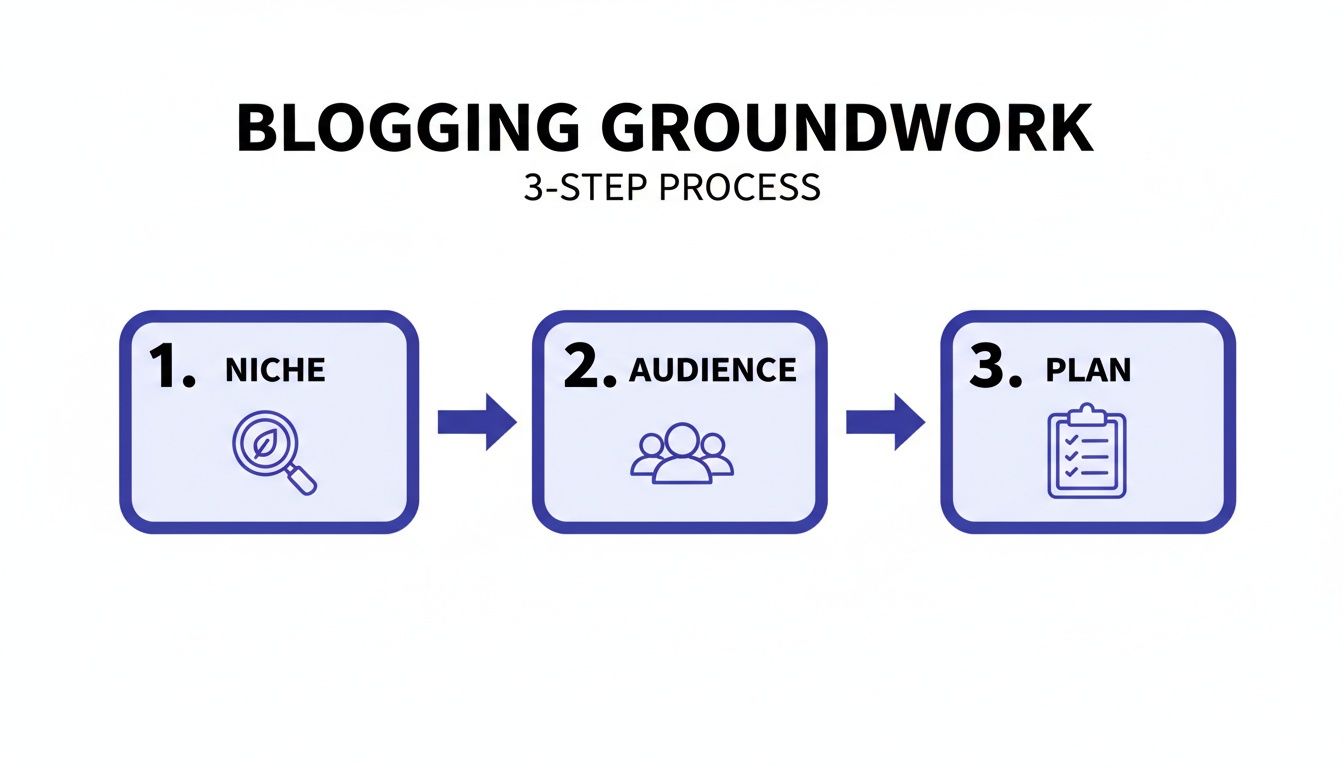
It’s the difference between writing for a generic "foodie" and crafting content for "Stressed-Out Sarah," a working mom who needs a killer vegan brownie recipe she can whip up in 20 minutes. When you write for Sarah, every word has a purpose.
If you're still on the fence about whether you should I start a blog, working through these foundational questions can give you the clarity and confidence to move forward.
Before we dive into the nitty-gritty of platforms and domains, let's zoom out. These initial choices are the bedrock of your entire blogging journey. Here’s a quick overview of the key decisions we’ll be walking through.
Key Decisions for Your New Blog
| Component | Why It Matters | Your First Goal |
|---|---|---|
| Niche & Audience | This defines what you'll write about and who you're writing for. It’s the core of your blog's identity. | Pinpoint a specific topic you're passionate about that also has an engaged audience. |
| Platform & Domain | This is your blog's technical foundation and its address on the internet. It impacts everything from cost to customization. | Choose a reliable platform (like WordPress) and a memorable, relevant domain name. |
| Content Strategy | This is your roadmap for creating valuable content consistently. Without a plan, you're just guessing. | Outline your first 5-10 blog post ideas that directly address your ideal reader's problems. |
| Promotion Plan | Great content is useless if no one sees it. This is how you'll get your words in front of the right people. | Identify 1-2 channels where your ideal reader hangs out (e.g., Pinterest, SEO) and focus there. |
These decisions might seem like a lot, but getting them right from the start saves you countless headaches down the road. Now, let’s get into the fun stuff.
Alright, you've nailed down your niche and have a crystal-clear picture of who you're writing for. Now for the fun part: giving your blog a name and a home on the internet.
This part feels big because, honestly, it is. The decisions you make here are the foundation for everything you'll build. Getting this right now saves you from massive headaches down the road. Trust me.
The first major choice is your blogging platform—the software you'll use to actually write, publish, and manage your content. There are a ton of options out there, but the conversation usually comes down to a couple of key players.
Picking the Right Blogging Platform
Your platform choice affects everything: how much control you have, how much you can customize, and your potential for growth. Most options fall into two main camps: hosted or self-hosted.
- Hosted Platforms (like Squarespace or Wix): Think of these as all-in-one services that handle all the technical stuff for you. They're super user-friendly and perfect if you just want to get a simple site up quickly. The trade-off? You're essentially renting space on their property, so you're limited by their rules and features.
- Self-Hosted Platforms (like WordPress.org): This is the path where you completely own your website. You pick your own web host and install the free, open-source WordPress software. It offers total freedom for customization, monetization, and growth, which is why it’s the gold standard for serious bloggers.
When you consider that there are over 600 million blogs online, you realize that standing out is the name of the game. A massive chunk of that digital real estate runs on one platform: WordPress powers over 43% of all websites. That kind of market share means you get incredible community support and an almost endless supply of tools to help you win. You can dig into more blogging stats over at Optinmonster.
For anyone truly serious about building a blog for long-term success, I always recommend a self-hosted WordPress.org site. Owning your platform isn't just a preference; it's non-negotiable if you want full control over your content and your business.

This is the engine for your blog. It gives you a powerful, flexible foundation that you can build on for years to come.
How to Choose a Memorable Domain Name
Your domain name is your address online (e.g., yourblogname.com). It's a huge part of your brand identity, so it’s worth spending some real time getting it right.
What makes a great domain?
- Easy to Say and Type: Ditch the hyphens, numbers, and weird spellings. If you have to spell it out loud for someone, it's too complicated.
- Brandable and Unique: It should stand out. A name like "NerdFitness" is way more memorable than something generic like "MyFitnessJourneyBlog."
- Hints at Your Niche: A name like "TheMinimalistBaker" instantly tells you what the blog is about. It sets the right expectation from the get-go.
- Go for .com: While there are other options, .com is still the most recognized and trusted domain extension. Make it your first choice.
If you're stuck, you can try a domain name generator, but start by brainstorming. Mix keywords from your niche with words that capture your personality or your reader's goals.
Understanding Web Hosting
So you've chosen WordPress.org and you have a domain name. Now you need a place on the internet to store all of your blog's files. That’s where web hosting comes in.
Think of it as renting a plot of digital land where your blog will live.
Your web host is a critical partner. It directly impacts your site's speed, security, and uptime (the percentage of time your site is online and working). A slow, clunky, or insecure website is one of the fastest ways to lose readers and torpedo your search engine rankings before you even get off the ground.
For anyone just starting out, a shared hosting plan from a reputable provider is the perfect entry point. It’s affordable, and most good hosts offer a one-click WordPress installation that makes the setup process surprisingly simple. You don't need a crazy-expensive plan on day one. Just pick a reliable host known for solid customer support, and you'll have the solid foundation your blog deserves.
Building Your Content Strategy and First Posts

Here's a hard truth: a blog without a plan is just an online diary. If you want to build something that attracts an audience, you can't just rely on random bursts of inspiration. You need a content engine.
This is where you build a sustainable system to eliminate that dreaded "what should I write about today?" panic. Before touching a single draft, it's worth understanding what a strong content marketing strategy entails, because it’s the foundation for everything that comes next.
Brainstorming Topics Your Audience Craves
Forget what you want to write about for a second. The best ideas come directly from your audience's problems. Your mission is to become the go-to answer for the questions they're already asking.
Remember "Stressed-Out Sarah" from earlier? What is she desperately typing into Google at 10 PM after a long day? That's your starting point.
Grab a notebook or open a document and just dump ideas. Don't filter, don't judge. Get it all out there.
- Solve a Specific Problem: Not "healthy eating," but "5 quick breakfast ideas for busy moms." See the difference?
- Answer a Burning Question: Frame your titles like "How to..." or "Why is..." You're meeting them exactly where they are.
- Create Valuable Lists: People love skimmable lists like "10 Best..." or "7 Tools for..." They're easy to digest and highly shareable.
- Share a Personal Story: A title like "My Biggest Mistake in Vegan Baking (and How I Fixed It)" builds trust and teaches a lesson simultaneously.
The most powerful content strategy is built on empathy. Constantly ask yourself: "What is my reader struggling with right now, and how can this post make their life a tiny bit easier?"
This simple mindset shift is the secret sauce. It’s a core piece of any good content strategy framework and it's what turns casual readers into loyal fans.
Simple Keyword Research with Free Tools
Okay, you've got a list of ideas. Now you need to find the exact phrases people are using to search for those solutions. This is keyword research, and it’s way less scary than it sounds. No expensive software needed to get started.
Your goal isn't to compete for massive, single-word terms. You're hunting for long-tail keywords—longer, more specific phrases that are much less competitive. Think "how to make sourdough starter from scratch" instead of just "baking."
Here are a few goldmines for finding these phrases:
- Google Autocomplete: Start typing a topic into Google. The suggestions that appear are real searches from real people. Pure gold.
- "People Also Ask" Box: That little box in the search results is a treasure trove of related questions. Each one could be its own blog post or a section in a larger article.
- AnswerThePublic: This free tool is amazing. It visualizes all the questions people are asking around your topic, giving you dozens of headline ideas in seconds.
Doing this takes the guesswork out of content creation. You're no longer hoping people care; you know they're already looking for what you have to say.
Creating a Simple Editorial Calendar
An editorial calendar is your roadmap to consistency. It doesn't have to be some complex project management tool; a simple spreadsheet is perfect. This is how you organize ideas, schedule posts, and avoid falling off the map.
Consistency is a huge signal to both readers and Google that your blog is active and reliable. For a new blog, aiming for one high-quality post per week is a fantastic and totally achievable goal.
Here’s a basic template to get you started. You can build this in Google Sheets or Excel in about five minutes.
Simple Editorial Calendar Example
| Publish Date | Post Idea | Primary Keyword | Content Format | Status |
|---|---|---|---|---|
| Oct 15 | 5 Vegan Breakfast Ideas | vegan breakfast ideas for kids | Listicle | In Progress |
| Oct 22 | Sourdough Starter Guide | how to make sourdough starter | How-To Guide | Outlined |
| Oct 29 | My Baking Mistakes | common vegan baking mistakes | Case Study | Idea |
| Nov 5 | Best Dairy-Free Milks | best dairy-free milk for baking | Comparison | Researching |
See? This simple plan turns your brainstorming session into an actionable strategy. You're now set up to create purposeful content that builds your authority, one post at a time. You're ready to start writing.
Writing and Promoting Your First Blog Posts
All the strategic work is done. You’ve got a plan, a platform, and a killer list of ideas. Now it’s time to shift gears from strategist to creator and finally hit “publish.”
This is the moment your blog truly comes to life. We’re going to focus on two things: crafting articles that are a joy to read and structuring them so search engines can’t help but notice.
Remember, your job doesn’t end when you publish. That’s when the real work of promotion kicks in.
How to Structure a Perfect Blog Post
Here’s a hard truth: people don’t read blogs like they read novels. They skim. They scan. They hunt for the good stuff.
Your number one job as a writer is to make your content incredibly easy to digest. A giant wall of text is the fastest way to send someone scrambling for the back button.
Think about how you’re reading this article. You’re likely jumping from heading to heading, looking for what matters most. Your readers do the exact same thing.
To create that skimmable experience, every single post needs these four elements:
- A Compelling Headline: Your title has one job—get the click. It has to promise a clear benefit and spark some curiosity. "How to Bake Vegan Brownies" is fine, I guess. But "The One-Bowl Vegan Brownie Recipe That Takes 20 Minutes" is way better. It promises speed and simplicity.
- An Engaging Introduction: The first few sentences must hook the reader immediately. Acknowledge their problem, show a little empathy, and then promise them your post holds the solution.
- Short Paragraphs and Sentences: Keep your paragraphs to 1-3 sentences maximum. This creates precious white space and makes the text feel way less intimidating.
- Descriptive Subheadings: Use H2s and H3s to break up your main points. They act like signposts, guiding readers through your content and helping them find what they need in a hurry.
If you ever find yourself just staring at a blank page, our guide on how to overcome writer's block has some practical tips to get the words flowing again.
On-Page SEO Essentials for Beginners
Search Engine Optimization (SEO) sounds way more technical than it is, especially at the beginning. On-page SEO is just the stuff you do inside your content to help Google figure out what it's all about. Getting this right from day one is a game-changer for your long-term traffic.
For every post you write, just focus on these three things:
- Keyword Placement: Your main keyword—the phrase you want to rank for—should show up naturally in your title, your intro, at least one subheading, and a few times in the body. Don't force it. Readability always wins.
- Internal Linking: When you mention a topic you’ve already covered in another post, link to it! This helps Google find more of your content and, just as importantly, keeps readers on your site longer.
- Image Alt Text: When you upload an image, take a second to describe it in the "alt text" field. This is huge for accessibility (helping visually impaired readers) and gives search engines another clue about your topic.
Think of on-page SEO as a clear conversation with Google. You're simply using specific signals to say, "Hey, this article is about [your topic], and it's the best answer for people searching for it."
Beginner-Friendly Promotion Tactics
Hitting publish is only half the battle. Now you’ve got to get eyeballs on your work. As a new blogger, you don't have a built-in audience, which means you have to be proactive.
The key is not to try and be everywhere at once. Pick one or two of these methods and really nail them.
Simple Promotion Checklist
| Tactic | Why It Works | How to Do It |
|---|---|---|
| Share in Online Communities | It puts your content directly in front of your ideal readers where they’re already hanging out and asking questions. | Find relevant subreddits, Facebook groups, or forums. Don't just drop a link and run. Answer a question thoughtfully, then add, "I actually wrote a full guide on this here if you want more detail." |
| Start Your Email List | This is the only audience you will ever truly own. It’s a direct line to your most loyal readers, immune to algorithm changes. | Offer a simple freebie (like a checklist or a short guide) in exchange for an email. Tools like Mailchimp or ConvertKit have free plans to get you started. |
| Engage on Social Media | It builds brand awareness and can drive those crucial initial traffic spikes to get the ball rolling. | Instead of just posting the link, pull out a key quote, a surprising stat, or a cool image from your post. Always ask a question to get people talking. |
Your first promotion efforts are all about creating sparks. You’re planting seeds in different corners of the internet to give your new blog the momentum it needs to attract its first true fans.
Growing Your Readership and Monetizing Your Blog

Okay, your content engine is humming. You're publishing consistently. Now what? The game shifts from simply creating to actively building a community around your work. This is where your collection of articles starts to feel like a real brand, and the idea of making money from it becomes a tangible reality.
Forget chasing viral hits—that’s a recipe for burnout. Sustainable growth comes from building genuine connections and finding smart ways to get in front of new people. The best way to do this early on? Tap into audiences that already exist.
Building Connections Beyond Your Blog
Guest posting on other blogs in your niche is, hands down, one of the most powerful moves you can make. It puts your name and expertise right in front of an engaged audience that's already primed to care about what you have to say. It’s like getting a warm introduction from a trusted friend instead of knocking on a stranger's door.
But don't stop at guest posts. Think bigger about creator collaborations:
- Podcast Interviews: Being a guest on a podcast lets a whole new audience hear your actual voice and get a feel for your personality. It's incredibly powerful for building trust quickly.
- Joint Webinars: Team up with another blogger for a free workshop. You'll share the promotional heavy lifting and both get access to each other's audiences.
- Social Media Takeovers: Offer to run another creator's Instagram or X (formerly Twitter) for a day. You provide them with great content, and in return, you get to drive their followers back to your blog.
These aren't just one-off promos; they build valuable backlinks for your SEO and cement your status as an expert in your space. This is a vital piece of the puzzle for generating blog content for organic traffic that works for you long-term.
From Casual Readers to Loyal Subscribers
Let me be clear: your email list is the single most important asset you will build as a blogger. It's an audience you own, completely insulated from the whims of social media algorithms. Building this direct line to your readers isn't optional—it's essential.
Start by offering a high-value lead magnet. This is just a simple, free resource someone gets for signing up. Think checklists, short e-books, or templates that solve one specific, nagging problem for your ideal reader. Make it so good they're happy to trade their email for it.
Your blog's job is to attract visitors. Your email list's job is to turn those visitors into a community. It’s the bridge between casual interest and loyal readership.
Realistic Paths to Monetization
The word "monetization" can sound big and scary, but it’s really just about earning an income from the value you're already providing. The trick is to start with methods that honor the trust you've built with your audience and don't require a million visitors to work.
For new bloggers, there are three main income streams that make the most sense to start with.
Common Monetization Models
| Method | How It Works | Best For Beginners? |
|---|---|---|
| Display Advertising | Placing ads on your site via networks like Google AdSense. You get paid for ad views and clicks. | Yes, it's easy to set up. But earnings are painfully low until you have serious traffic (think 10,000+ monthly visitors). |
| Affiliate Marketing | You promote products you trust and earn a commission when someone buys through your unique link. | Absolutely. This is the perfect place to start. You can begin from day one by recommending tools you already use. |
| Digital Products | You create and sell your own stuff, like e-books, templates, workshops, or courses. | This is the most profitable route, but it's smart to build an audience first to ensure you have people to sell to. |
Honestly, affiliate marketing is the ideal starting point. It lets you earn income without having to create a product from scratch. The golden rule here is authenticity. Only recommend products you genuinely believe in and that will actually help your readers. Sacrificing your audience's trust for a quick commission is a short-sighted mistake you can't afford.
Once your traffic grows and you've established yourself as a trusted voice, you can then start thinking about creating your first digital product. That’s where the real profit potential lies, and it solidifies your status as a true expert in your field.
Your Top Questions About Starting a Blog, Answered
If you’re thinking about starting a blog, you probably have a few nagging questions rattling around in your head. That’s completely normal. I’ve been there. Let’s cut through the noise and tackle the big three I hear all the time: cost, time, and tech skills.
Getting straight, no-fluff answers to these is often the final push you need to just get started.
How Much Does It Actually Cost to Start a Blog?
You can get a serious blog off the ground for less than the price of a couple of coffees a month. I'm not kidding. Your only two must-haves are a domain name and web hosting.
Most good hosts will even throw in the domain for free for the first year, with solid hosting plans starting around $3-$5 per month.
Sure, free platforms are out there, but trust me on this: investing in a self-hosted blog from day one gives you complete control. It's the only real choice if you're serious about long-term growth. You don't need to splurge on fancy themes or expensive tools right at the start.
How Long Until My Blog Gets Traffic or Makes Money?
Let’s be real: blogging is a marathon, not a sprint. If you commit to a consistent schedule—publishing high-quality, SEO-focused content once or twice a week—you can realistically expect to see meaningful organic traffic from search engines in about 6 to 12 months.
Money almost always follows traffic. You can sprinkle in some affiliate links early on, but don't expect significant income until you've built an actual audience that knows and trusts you.
The single most important thing you can do is focus on providing genuine value first. The traffic, and eventually the income, will come as a natural result of building that trust.
Do I Need to Be a Tech Expert to Start a Blog?
Absolutely not. The days of needing to be a coding wizard to launch a website are long gone. The technology behind blogging has become incredibly straightforward and accessible.
Most reputable web hosts offer simple, one-click installations for platforms like WordPress. Once it’s set up, the dashboard where you write and publish is as intuitive as a word processor or your email inbox.
If you can browse the web and send an email, you have all the technical skills you need to launch and manage a successful blog. No coding is necessary.
Feeling overwhelmed trying to turn your expertise into consistent content? PostFlow can help. Emilia, your personal AI content strategist, interviews you to pull out your best ideas and transforms them into engaging, ready-to-publish LinkedIn posts. Stop staring at a blank page and start building your authority. Learn more at https://gopostflow.com.