A solid content distribution strategy isn't just marketing jargon—it's the system you build to get your ideas in front of the people who matter. It’s the difference between publishing a brilliant post that gets seen by everyone, and one that just… disappears.
Why Most LinkedIn Content Fails to Get Noticed
We’ve all been there. You spend hours, maybe even days, crafting a genuinely insightful post for LinkedIn. You hit publish, feeling that little flicker of excitement, only to be met with… crickets.
Sure, a few friendly colleagues might drop a like, but where are the client inquiries? The DMs? The industry buzz you were hoping for? It’s easy to assume your content just wasn’t good enough. But that’s rarely the whole story.
The hard truth is that great content isn't enough to cut through the noise on its own. Without a deliberate plan to push your ideas into the right feeds, even the sharpest insights get buried. The old "post and pray" method is a surefire recipe for staying invisible.
The Real Reasons Your Content Gets Buried
I see founders and consultants fall into the same traps over and over. It's not because they lack expertise; it's because they lack a system. A real content distribution strategy goes way beyond just hitting the publish button. It’s about intentional, strategic amplification.
Here are the specific missteps that kill most content before it has a chance:
- Random Posting Schedules: When you post sporadically, you confuse the algorithm and your audience. There's no rhythm, no momentum. You never become that go-to, consistent voice people expect to see in their feed.
- Sticking to One Format: Only posting text? Or just dropping links? You're ignoring the simple fact that people consume content differently. A mix of carousels, images, and short-form video keeps your feed feeling fresh and hooks a much wider audience.
- Ignoring the Community: Distribution isn’t a monologue. If you're not engaging with comments on your own posts—or, just as importantly, on others' posts in your niche—you're leaving a massive opportunity on the table. Engagement is a huge signal to LinkedIn that your content is worth showing to more people.
The biggest mistake I see is people treating LinkedIn like a static resume instead of what it really is: a dynamic platform for conversation. Your content should be the start of a discussion, not the final word.
Ultimately, winning on LinkedIn requires a mindset shift. Stop thinking of yourself as just a content creator and start acting like a content promoter. This means having a concrete plan for when you post, what formats you’ll use, and how you'll engage with your community to get your message out there.
This is how you turn your content from a passive asset into a proactive tool that attracts clients and builds real authority. It’s time to stop leaving your growth to chance.
How to Build a Sustainable Content Engine
Posting sporadically on LinkedIn is a great way to stay invisible. If you want to build real authority and actually attract clients, you need to stop committing random acts of content. It’s time to build a system—a content engine that pumps out high-value insights consistently, without burning you out.
This isn’t about creating more content. It's about creating a smarter, repeatable workflow. The idea is to turn your everyday work and expertise into an endless well of ideas, so you're never staring at a blank page again. A solid content engine is the absolute foundation of any content distribution strategy that works.
Identify Your Core Content Pillars
Before you start building the engine, you need to know what it’s going to produce. This starts with defining your core content pillars—the three to five key topics you want to own. These pillars are your north star, making sure every single thing you post reinforces your expertise and pulls in the right kind of audience.
Just think about the main problems you solve for your clients. What questions do they ask over and over? What’s your unique take on your industry?
- For a B2B sales consultant: Your pillars could be Prospecting Strategies, Closing Techniques, and CRM Optimization.
- For a freelance brand strategist: You might focus on Brand Positioning, Messaging Frameworks, and Visual Identity.
- For a SaaS founder: Your pillars could be Product-Led Growth, Customer Retention, and Bootstrapping.
These aren't just topics; they're the strategic bedrock of your personal brand. They make your content instantly recognizable and your value proposition impossible to ignore.
Turn Everyday Insights into Content Fuel
The biggest thing that trips people up is the constant pressure to come up with new ideas. Here's the secret: stop trying to have ideas and start capturing them as they happen. Your daily work is an absolute goldmine.
Get into a "capture everything" mindset. A simple voice notes app on your phone is all you need. The moment you hang up from a client call, finish a team meeting, or hear something interesting on a podcast—record your thoughts. Don't censor yourself or worry about sounding polished. Just talk.
Imagine this: You just wrapped a discovery call where you nailed down a client’s biggest pain point. Instead of letting that insight evaporate, you grab your phone and record a two-minute voice note on the problem and your solution. That single recording is now a seed for a dozen different pieces of content.
This simple habit turns fleeting thoughts into real assets. A 10-minute voice memo can be transcribed and chopped up into a week's worth of LinkedIn drafts, a script for a short video, or the main points for your next newsletter. You’re essentially creating an assembly line for authentic content that’s always ready to go. We talk a lot more about why consistency beats perfection in content marketing in our guide.
Creating Your Content Assembly Line
Once you’re capturing these raw ideas, the next step is building a repeatable process to get them published. This is where a platform like PostFlow becomes your command center, handling everything from recording and drafting to scheduling and analytics.
Without a system, even the best content dies on the vine. This is what that failure looks like.
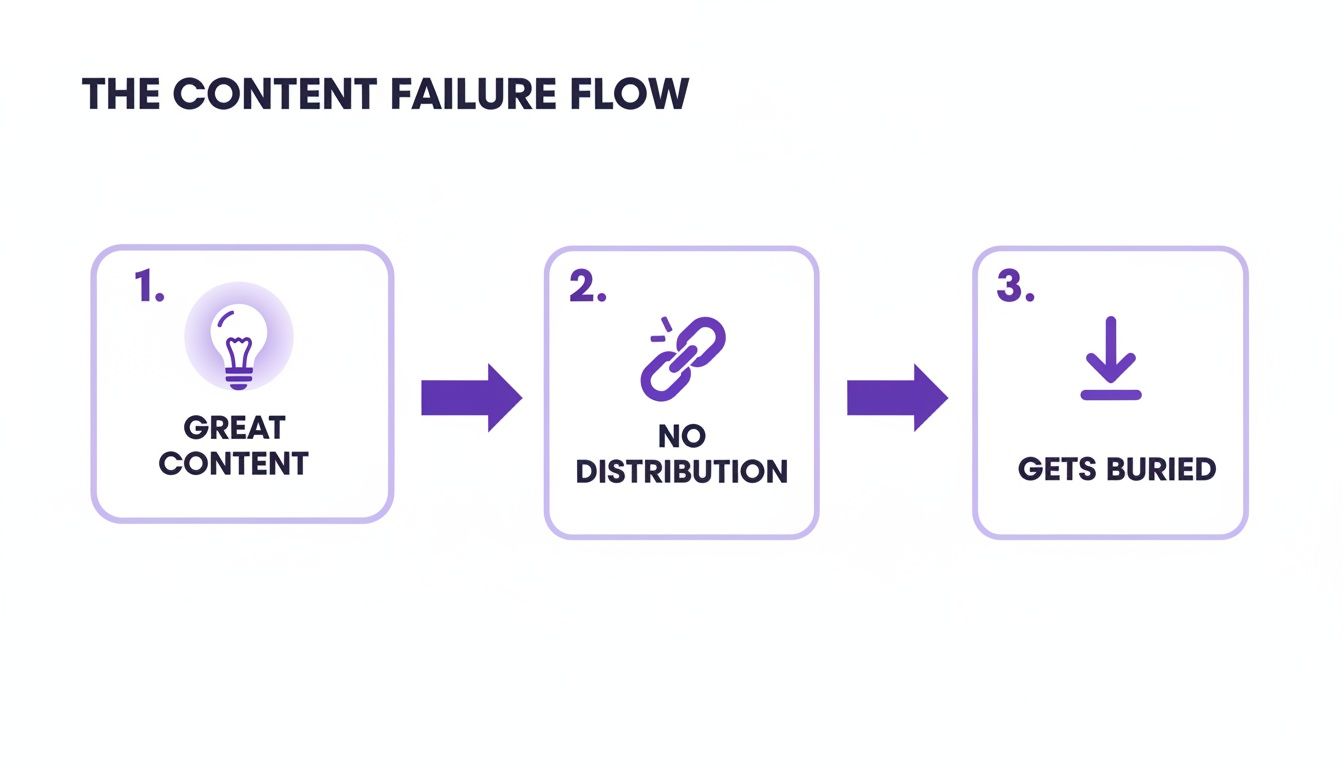
The picture is pretty clear: brilliant ideas are worthless if they never find an audience. This is exactly what happens without a deliberate plan for distribution, and it’s why having an engine is so critical.
To make sure your content actually gets seen, you'll want to explore these 10 proven content distribution strategies to get your message out there. Building the engine is half the battle; the other half is making sure people see what it produces. With a system in place, you go from being a sporadic creator to a consistent authority, building momentum with every post.
The Art of Strategic Content Repurposing
Your best ideas deserve more than a single day in the LinkedIn feed. A powerful content distribution strategy isn’t about just getting one post seen; it's about making your core message work harder for you across the board.
This is where strategic content repurposing comes into play. It’s the art of taking one strong idea and multiplying its impact across different platforms.
This approach turns a single piece of work into five or more, dramatically increasing your visibility without demanding five times the effort. You're not just reposting. You're translating your message for new audiences and new formats.
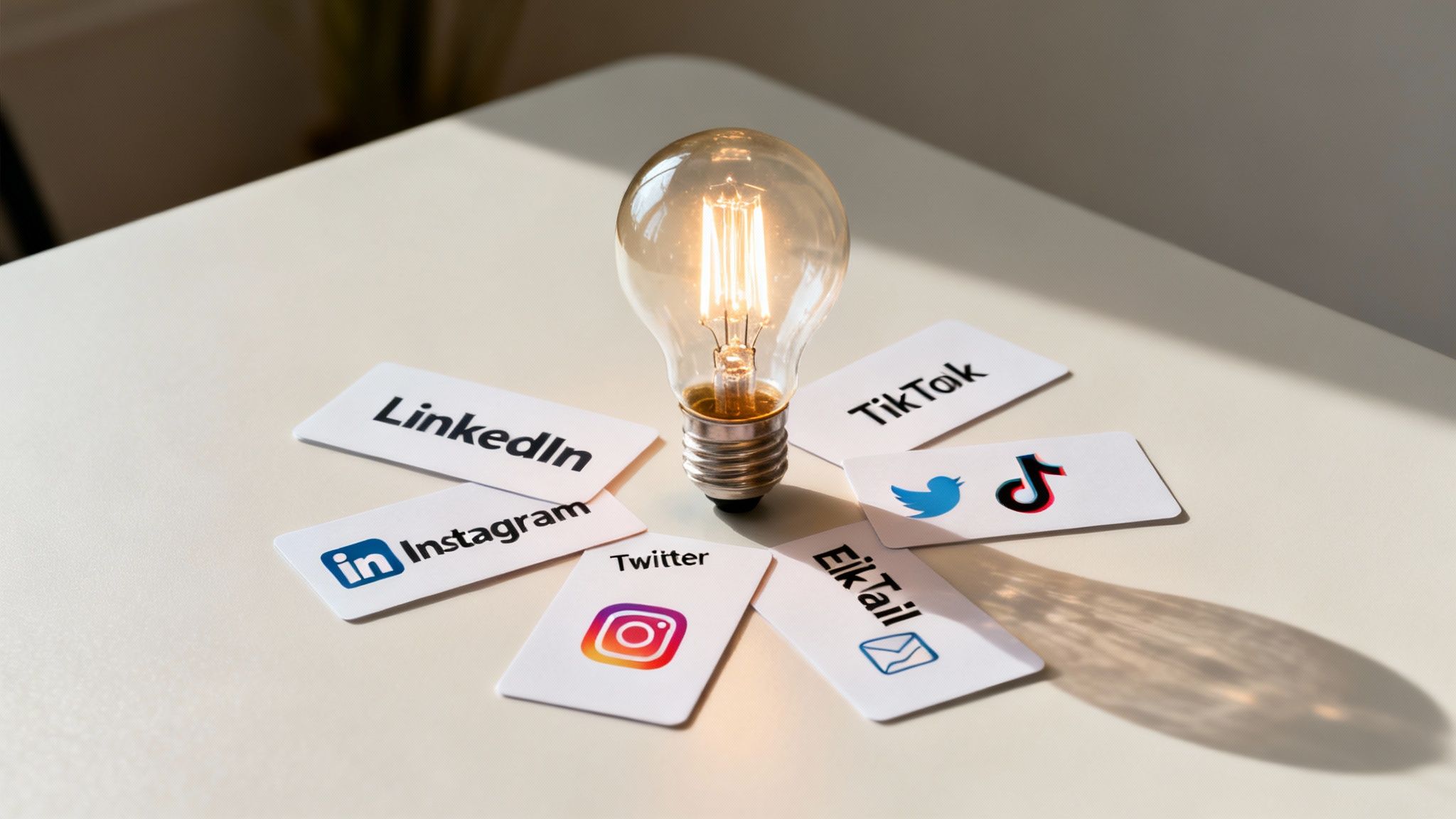
From LinkedIn Post to Multi-Channel Asset
Let's get practical. Say you just published a 200-word text post on LinkedIn sharing your unique framework for client onboarding. It’s solid, it got decent engagement. Now what?
Instead of moving on, let's turn that single post into a full-blown content campaign. This isn’t about copy-pasting; it’s about adapting the format and tone for each platform’s culture while keeping your core idea intact.
- Instagram Carousel: That text post becomes a visually punchy 5-7 slide carousel. Each slide breaks down one step of your framework with a bold headline and a key takeaway. Use your brand’s colors and fonts to make it scannable and shareable.
- Twitter (X) Thread: Condense each point into a punchy, 280-character tweet. String them together in a thread that starts with a strong hook to pull readers in. Drop in a few relevant hashtags to reach new audiences interested in client management.
- TikTok or Reels Script: Use the LinkedIn post as a script for a quick, 30-second talking-head video. Look at the camera, deliver your key points with energy, and add on-screen text captions to highlight the main takeaways for all the sound-off watchers.
- Email Newsletter Snippet: Grab the core idea and feature it in your weekly newsletter. Frame it as an exclusive tip for your subscribers, maybe expanding on one point with a bit more detail than you did on LinkedIn.
Repurposing isn't about being lazy; it's about being efficient. You're maximizing the return on the intellectual energy you've already invested in creating the original idea.
Just like that, you've taken one idea and created five distinct assets. You’ve met your audience where they hang out, in the format they prefer, reinforcing your expertise across the board. This is a cornerstone of an effective content distribution strategy.
For a deeper dive, check out our guide on powerful content repurposing strategies to get even more mileage from your work.
Your Content Repurposing Playbook
To make this even clearer, think of your original LinkedIn post as the "pillar" content. From that single pillar, you create a whole bunch of "micro" assets tailored for different channels. For anyone looking to speed this up, tools like Shortgenius for content repurposing can be a huge help in transforming longer content into engaging short-form clips and posts.
Here’s a simple playbook to visualize how this works in practice.
Your Content Repurposing Playbook
| Original LinkedIn Asset | Repurposed Format | Target Channel | Key Tactic |
|---|---|---|---|
| Long Text Post | Visual Carousel | Break down key points into digestible slides with strong visuals. | |
| Client Success Story | Short Video | TikTok / Reels | Tell the story in a quick, engaging narrative with on-screen text. |
| Data/Stat Analysis | Infographic | Twitter (X), Pinterest | Create a simple graphic that visualizes the key statistic. |
| Video Interview Clip | Quote Graphic | Instagram, Facebook | Pull a powerful quote and place it on a branded background. |
| How-To Guide | Email Series | Newsletter | Expand each step of the guide into a separate, value-packed email. |
Adopting this systematic approach ensures your best ideas don't just disappear after 24 hours. Instead, they keep circulating, attracting new followers, starting conversations, and cementing your authority in your niche. It’s how you build a powerful, omnipresent brand without burning yourself out.
Creating a Cadence for Maximum Impact
Let's be real: consistency is the secret sauce on LinkedIn. It’s what separates the people you remember from the noise you scroll past. Building a solid cadence isn't about spamming the feed 24/7. It’s about creating a predictable rhythm that teaches both the algorithm and your audience when to expect gold from you.
A planned posting schedule takes your content distribution strategy from a bunch of random acts to a deliberate system for growth. No more staring at a blank screen wondering, "What should I post today?" Instead, you’re consistently dropping value when it will hit the hardest.
Understanding the LinkedIn Sweet Spot
Not all hours are created equal, especially in the B2B universe. While your own analytics are always the ultimate source of truth, there are some pretty clear patterns. For most of us—founders, consultants, and creators—the magic happens mid-week, mid-morning.
Think about the rhythm of a typical workweek. Mondays are for catching up, and by Friday, everyone’s mentally checking out. That leaves Tuesday, Wednesday, and Thursday as prime time for professional content.
Specifically, the 10 AM to noon window is where I’ve seen the most engagement. People have cleared their morning fires, grabbed their coffee, and are scrolling their feeds for industry insights before lunch. Posting then gives your content its best shot at getting that crucial initial traction.
It pays to be consistent in this window. With 1.3 million feed updates viewed every minute, you’re tapping into a massive stream of activity. You can dig deeper into the data behind this in Buffer's latest LinkedIn research.
Planning Your Content with a Calendar
Your content calendar is your command center. It turns abstract ideas into a concrete, actionable plan. Seriously, using a simple spreadsheet or a platform like PostFlow to map out your content a couple of weeks ahead is an absolute game-changer.
This foresight lets you think strategically. You can plan posts around industry events, product launches, or trending topics, making sure your content is always hitting the mark.
A content calendar isn't a prison; it's a framework for freedom. Planning ahead frees up the mental bandwidth to focus on what actually grows your business: engaging with your audience and building real relationships.
This proactive approach stops the frantic, last-minute posting that almost never performs well. You're building a reliable rhythm that turns followers into a community.
Strategically Mixing Your Content Formats
Only posting text is like a band that only knows one chord. To keep your audience hooked, your content distribution strategy needs variety. Different formats serve different purposes and appeal to different people.
A dynamic feed tells the algorithm—and your followers—that you're a versatile creator who puts thought into their content. It keeps things from getting stale.
Here’s a simple mix I recommend aiming for each week:
- Text-Only Posts: Fantastic for telling stories, sharing a strong take, or sparking a debate. These are your conversation starters.
- Carousels (Document Posts): Perfect for breaking down complex ideas into bite-sized steps. Think mini-guides or data breakdowns. The interactive swiping keeps people on your post longer.
- Image or Quote Graphics: These are your scroll-stoppers. Use them to highlight a powerful quote or visualize a key takeaway.
- Video Content: Nothing builds trust and connection faster. Use short videos for quick tips, a behind-the-scenes look, or to share a personal story.
By rotating through these formats, you’re not just throwing content out there—you’re creating an experience. This variety ensures your message doesn't just reach people, it actually resonates, building the momentum you need for real, sustained growth.
Measuring Performance to Optimize for Growth
Let’s be honest. A content distribution strategy without measurement is just guesswork. You're putting in the work, but if you don't know what's landing, you might as well be posting into the void.
It's time to stop chasing vanity metrics and start making data-driven decisions that actually fuel your growth. By digging into your analytics, you can figure out what works, do more of it, and scrap the rest.
Key Metrics That Actually Matter
When you first peek at your LinkedIn analytics, it's easy to get overwhelmed. To cut through the noise, you need to focus on the numbers that tell a clear story about what your audience cares about.
Here’s what I track religiously:
- Impressions: This is simply how many times your post was shown in someone's feed. While it's not the whole story, a big spike in impressions is a good sign that the LinkedIn algorithm is on your side.
- Engagement Rate: This is the big one. It’s your total engagements (likes, comments, reposts) divided by impressions. A high engagement rate means your content isn't just being seen—it's resonating. People are stopping the scroll to interact.
- Click-Through Rate (CTR): Got a link in your post? This tells you how many people actually clicked it. It’s a direct measure of how compelling your copy and call-to-action really are.
- Profile Views: Is your content making people curious enough to check you out? A jump in profile views after posting is a solid indicator that you're attracting potential clients or collaborators.
These numbers are more than just data points; they're direct feedback. They tell you exactly what your audience wants more of.
Your analytics are your audience telling you exactly what content to create next. Ignore them at your own peril. If personal stories are getting double the engagement of industry analysis, that’s not an anomaly—it’s a road map.
Conducting Your Monthly Content Review
Data is useless if you don't act on it. I make it a non-negotiable to set aside time at the end of each month for a quick content review. This doesn't need to be a huge, complicated spreadsheet session. The goal is to spot patterns and turn them into a plan for the next month.
This simple habit transforms your content distribution strategy from a static document into a living, breathing system that gets smarter with every post. It creates a feedback loop that keeps you optimizing for better results. For a more detailed breakdown, our guide on how to analyze content performance walks through the entire process.
Turning Insights into Actionable Strategy
During your review, zero in on the outliers. What were the top 2-3 posts that absolutely crushed it last month? Pull them up and dissect them.
Ask yourself:
- What was the format? Was it a text-only post, a carousel, or a video?
- What was the topic? Did you share a personal story, a tactical tip, or a client win?
- What was the hook? How did that very first line grab their attention?
The answers reveal the formula that works for your specific audience. If you notice carousels breaking down a complex process get shared like crazy, your action item for next month is clear: create more step-by-step carousels. If posts that start with a vulnerable story drive the best conversations, lean into that style.
This data-backed approach is essential on a platform like LinkedIn, where members view 280 billion feed updates a year. The creators who consistently analyze and adapt are the ones who turn those billion-plus members into loyal followers and real business leads. This is especially true with video, which can pull in 5x the engagement of text posts, making it a killer format for grabbing attention.
This is exactly why we built PostFlow—to bring scheduling and analytics into one place. It makes it dead simple to spot these trends and tweak your strategy without drowning in spreadsheets. When you consistently measure, analyze, and optimize, your content stops being a chore and becomes your most powerful growth engine.
LinkedIn Content FAQs
Even with the best strategy laid out, the practical questions always seem to pop up. When you're building a content distribution strategy from scratch, it’s the little details that can feel overwhelming.
So, let's get into the weeds and answer the questions I hear most often. Getting these right is what separates the people who post consistently from those who fizzle out.
How Often Should I Post on LinkedIn?
Look, there’s no magic number here. But I can tell you this: consistency always beats frequency.
It’s a thousand times better to post three solid, high-quality pieces every single week than to spam the feed twice a day for a week and then vanish for a month. That hot-and-cold approach just doesn't work.
Find a rhythm you can actually stick with. For most founders and consultants, the sweet spot is somewhere between 3 to 5 times per week. This keeps you top-of-mind with your network and plays nicely with the LinkedIn algorithm, which tends to favor predictable activity.
What Content Formats Perform Best?
A killer content distribution strategy is all about the mix. Don't get stuck in a rut using only one format.
- Text-only posts are amazing for telling stories and getting a conversation started, especially with a killer first line.
- Document posts (carousels) are pure engagement gold. They’re perfect for breaking down a complex idea into bite-sized, swipeable steps.
- Videos might get fewer views right out of the gate, but they are absolutely unmatched for building a real, human connection with your audience.
The best move? Rotate through them. This keeps your feed from feeling stale and, more importantly, gives you data on what your specific audience actually wants to see. Dive into your analytics and see what’s getting the most meaningful comments and shares.
Should I Create New Content or Repurpose Old Posts?
If you’re struggling with low engagement, the answer is almost always distribution and repurposing. It’s not that your content is bad—it’s that the right people aren’t seeing it. Low engagement is a distribution problem, not a quality problem.
Before you even think about creating something new, go find your best-performing posts from the last six months. Give them a second life. You can reshare them, sure, but a better approach is to repurpose them. That detailed text post? It could become a carousel, the script for a 90-second video, or even a punchy Twitter thread.
Once you have a system for getting your existing content back out there, then you can start weaving new ideas into your workflow.
How Can AI Tools Help with Content Distribution?
AI platforms are built to solve the two biggest things that kill a content strategy: not enough time and a lack of consistency. For a busy professional, they’re a massive force multiplier.
Think about it this way: an AI assistant can take a 2-minute voice note of you rambling about an idea and turn it into three polished drafts. That alone cuts your creation time by 90%.
From there, tools like these help you schedule posts when your audience is most active and analyze what’s working—all from one dashboard. It centralizes your entire process, making a sophisticated distribution strategy feel totally manageable, even if you’re a team of one.
Ready to stop guessing and start building a real presence on LinkedIn? PostFlow is your AI content strategist, designed to turn your expertise into consistent, high-impact posts that actually attract clients. Try PostFlow today and build a content engine that works for you.